
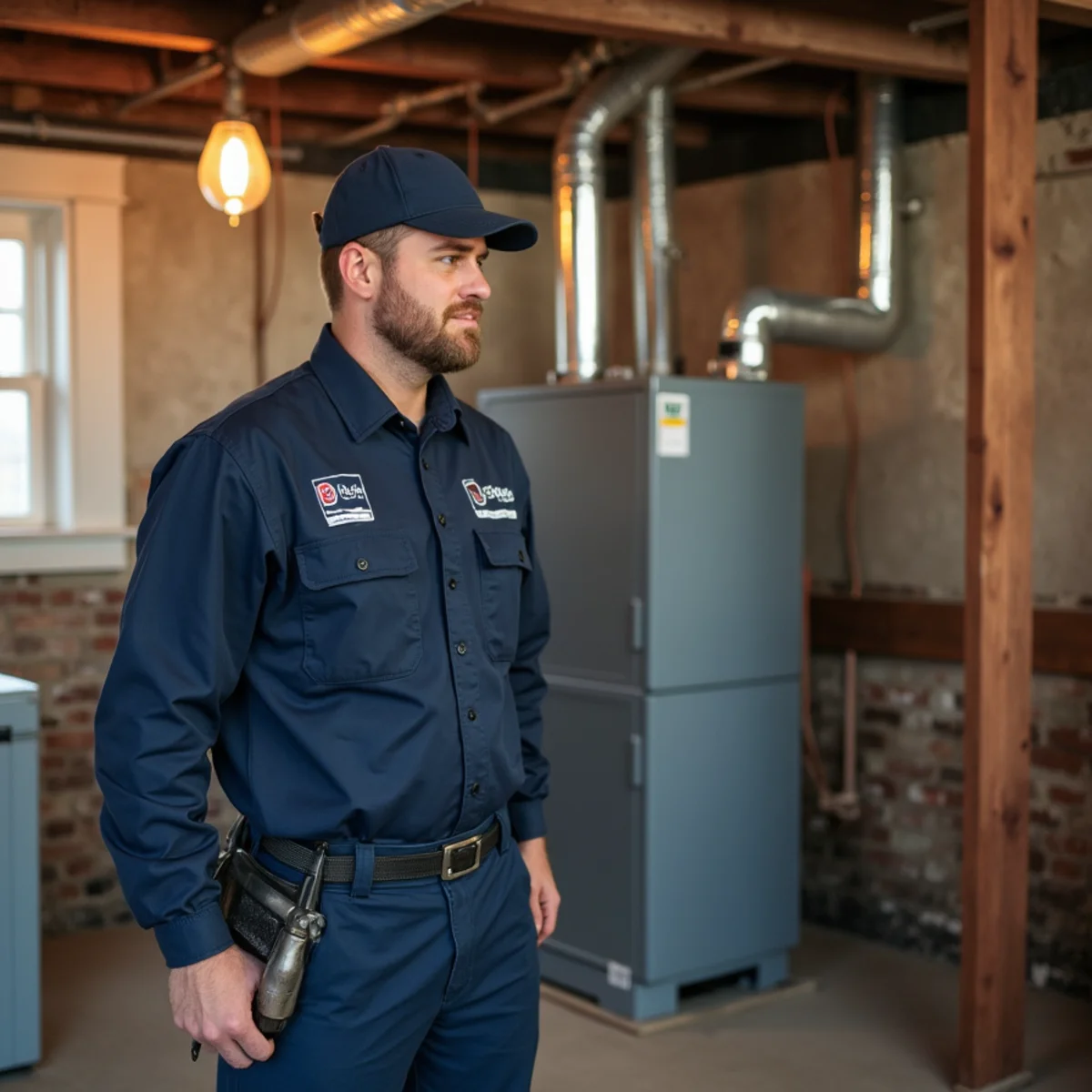
Replacing a boiler in one of Newburgh's older homes has its own cost drivers. Here's what actually goes into the price, and how to budget for it honestly.
Newburgh has one of the richest collections of historic homes in the Hudson Valley, and a lot of them are still heated the way they were built to be: a boiler in the basement feeding cast-iron radiators. When that boiler reaches the end of its life — and many are decades past their prime — replacement is a bigger decision here than in a newer subdivision. The house itself shapes the cost. Here's what historic-home owners actually pay, and why.
The honest range
Boiler replacement in the Newburgh area commonly falls in the $4,000 to $7,500 published local range for a residential system, and it varies with scope — a straightforward swap of a like-for-like unit sits lower, while a high-efficiency conversion with new venting, piping, and controls sits higher. In older homes the range widens, because the work isn't just setting a new boiler; it's adapting modern equipment to a system that predates it.
Why one quote differs from another
Two estimates can differ by thousands and both be fair. The gap usually comes down to boiler efficiency, whether venting and gas lines need updating, and how much old piping has to be reworked. Compare what's included, not just the bottom line.
What drives the price in an older home
Boiler type and efficiency
A standard-efficiency cast-iron boiler costs less up front than a high-efficiency condensing unit, but the condensing model burns less fuel every winter. Condensing boilers also need different venting — PVC through a sidewall instead of the old chimney — which adds install work but can pay back over the life of the unit. For a historic home with radiators, the sizing and match matter more than chasing the highest efficiency number.
Venting and chimney work
Many older Newburgh homes vented the boiler through a masonry chimney. When you switch to a high-efficiency unit, that chimney may need a liner or gets abandoned in favor of direct venting. Chimney and venting updates are one of the most common surprise costs, so a good estimate spells them out.
Piping, radiators, and near-boiler work
- Old steam and hot-water piping may need adapting to connect to a modern boiler.
- Aging shutoffs, circulators, and expansion tanks are often replaced at the same time — it's cheaper to do it now than to open the system again later.
- Radiators themselves usually stay, which is a real advantage: you keep the character and the even, comfortable heat.
Access and permits
Tight basement stairs and cramped mechanical rooms in older homes make the physical install harder. And the City of Newburgh requires permits for heating work — a legitimate contractor pulls them and builds that into the quote. If a bid seems suspiciously low, ask whether permits are included.
The case for replacing in the East End
Owners in the East End Historic District tell us the same thing: they love the radiators and the steady warmth, but the old boiler drinks fuel and rattles them awake. A modern replacement keeps everything they like about the heat while cutting fuel use, running quietly, and firing reliably on the coldest nights. It's also a chance to add proper zoning, so the third-floor bedrooms and the drafty parlor can finally hold different temperatures instead of fighting one thermostat. Our boiler installation team specializes in exactly this — dropping efficient equipment into homes built long before it existed, without tearing out the radiators that make these houses comfortable or disturbing the original plaster and millwork.
Where your replacement dollars go
| Cost driver | Impact on price |
|---|---|
| Standard vs high-efficiency boiler | Moderate to significant |
| Chimney liner or new venting | Common added cost in older homes |
| Near-boiler piping and circulators | Moderate |
| Permits and inspection | Required, built into honest quotes |
| Difficult basement access | Adds labor |
How to budget and save
- Get at least two itemized estimates and compare what's actually included, not just the total.
- Ask about high-efficiency incentives — some gas and heat-pump upgrades qualify for rebates that change the math.
- Replace on your timeline, not in a January emergency, when you have room to compare options and avoid rush pricing.
- Consider financing spread against the fuel savings a modern unit delivers each winter.
If your boiler is limping through winters, don't wait for it to die on the coldest night and force a rushed decision. A planned boiler repair evaluation now tells you honestly how many seasons it has left, so you can budget a replacement on your terms rather than paying emergency prices in a January cold snap. It also gives you time to gather two or three itemized quotes and compare the venting, piping, and efficiency choices side by side. In a historic Newburgh home, the right boiler isn't just an appliance — it's what keeps a century-old house comfortable for the next generation without the fuel bills that come with a worn-out unit.
Planning a boiler replacement?
Get an honest, itemized estimate for your historic Newburgh home. Call HVAC Newburgh NY at +1 (327) 210-5999 — we specialize in older homes and radiator systems.
HVAC Newburgh NY · 48 Carter St, Newburgh, NY 12550
Boiler replacement price by scope (Newburgh)
| Scenario | Where it lands in $4,000–$7,500 | What moves the price |
|---|---|---|
| Like-for-like standard boiler swap | Lower end | Minimal venting and piping changes |
| High-efficiency condensing conversion | Upper end | Sidewall venting, new controls, PVC runs |
| Historic home with chimney and pipe work | Top of range or above | Chimney liner, near-boiler piping, tight access |
| Added zoning during replacement | Adds to the base | Independent control for upper floors and cold rooms |
Frequently asked
Residential boiler replacement commonly falls in the $4,000 to $7,500 published local range and varies with scope. A simple like-for-like swap sits lower; a high-efficiency conversion with new venting and piping sits higher, and older homes often land at the upper end because of chimney and pipe adaptations.