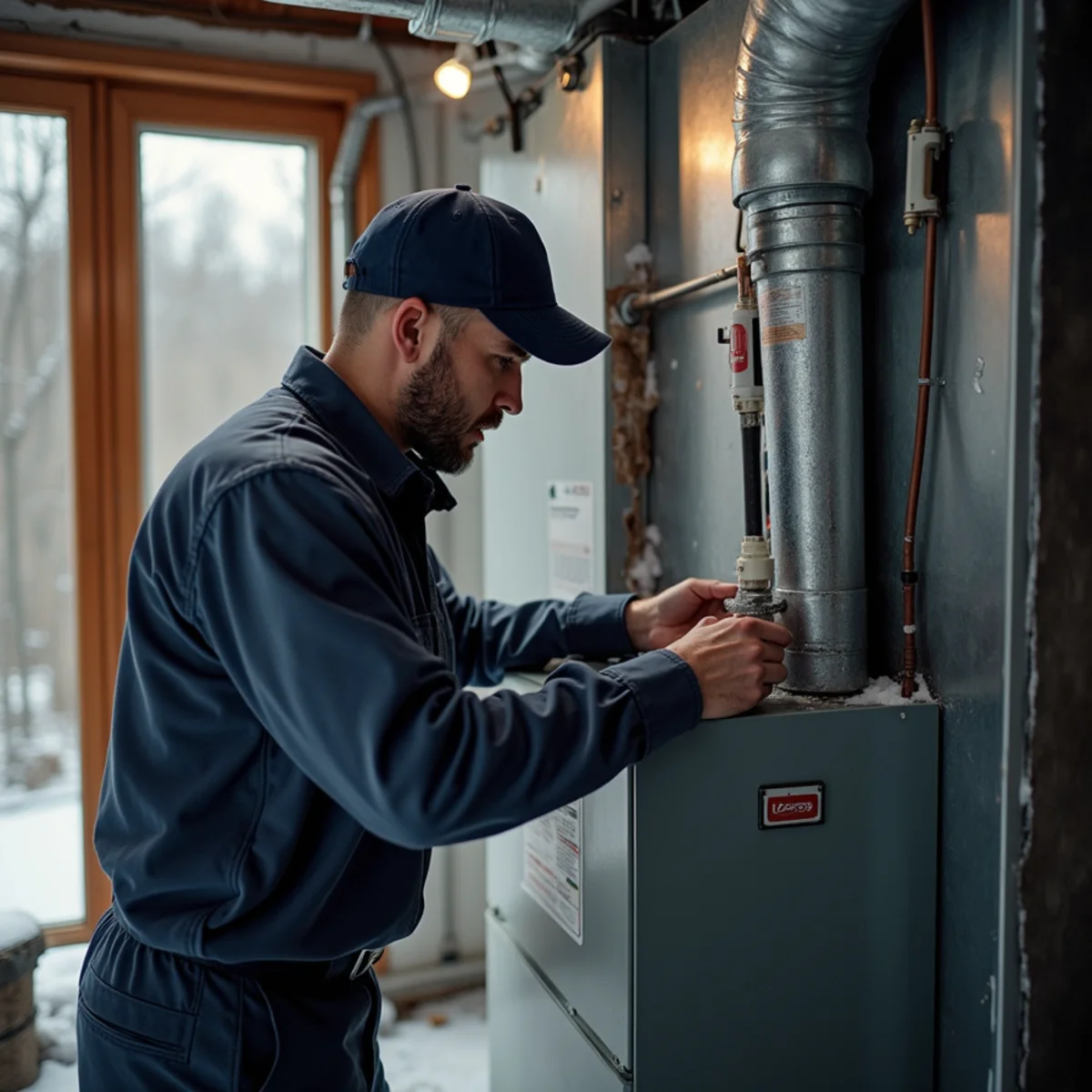
A furnace usually quits on the coldest morning of the year, not a mild one. When the first hard freeze pushes into the Hudson Valley and the house won't hold 68, you need a technician who can read the equipment fast and get burners firing again — not one who guesses at parts. We repair gas, oil, and electric furnaces throughout the City and Town of Newburgh, and most no-heat calls are diagnosed on the first visit. You get a written cause, a clear price, and heat restored before the pipes get cold.
HVAC Newburgh NY — furnace repair in Newburgh, NY.
Signs you need furnace repair
Furnace runs but blows cold or lukewarm air
Blower cycles on and off every few minutes (short cycling)
Ignitor clicks but the burners never light
Loud bang, rumble, or metallic scrape at startup
Yellow or flickering burner flame instead of steady blue
Rising gas or oil bills with no extra comfort
Carbon-monoxide alarm sounding near the unit
Common furnace problems we fix in Newburgh homes
Newburgh's housing runs from pre-1900 rowhouses in the East End Historic District to postwar ranches in Gardnertown and newer builds out toward Orange Lake. That range means we see everything: high-efficiency condensing furnaces with clogged condensate traps, mid-efficiency gas units with worn flame sensors, and oil furnaces that haven't had a nozzle change in three seasons. Most no-heat calls trace back to a handful of failures — a dirty flame sensor, a cracked hot-surface ignitor, a tripped pressure switch, or a control board that lost its mind after a power blink during a nor'easter.
The failure that scares us most is a cracked heat exchanger. It can leak combustion gases into the air you breathe, and no repair patches it safely. If your carbon-monoxide alarm is going off, that is not a furnace call first — it is a get-out-of-the-house call.
Smell gas or hear a CO alarm? Leave first.
If you smell rotten eggs or a CO detector is sounding, leave the house immediately, don't flip switches, and call 911 or Central Hudson from outside. Then call us to make the system safe. Never relight a furnace that shut itself down on a safety control — it locked out for a reason.
What our furnace repair visit looks like
1
Safety and combustion check
We confirm the gas or oil supply, inspect venting, and test for combustion spillage before touching anything electrical.
2
Sequence-of-operation test
We watch the furnace try to start and pinpoint exactly where it fails — call for heat, ignition, flame proving, or blower.
3
Component testing
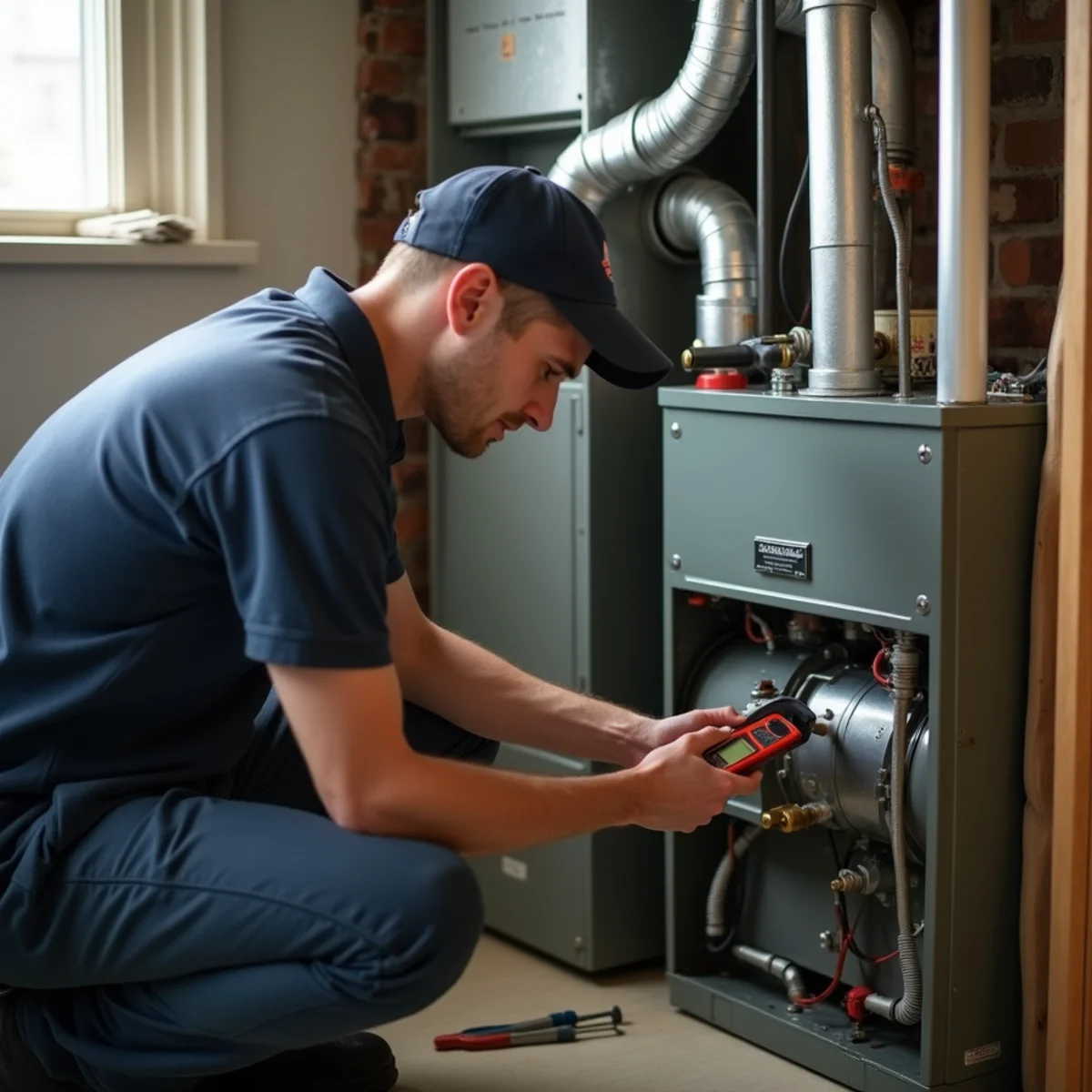
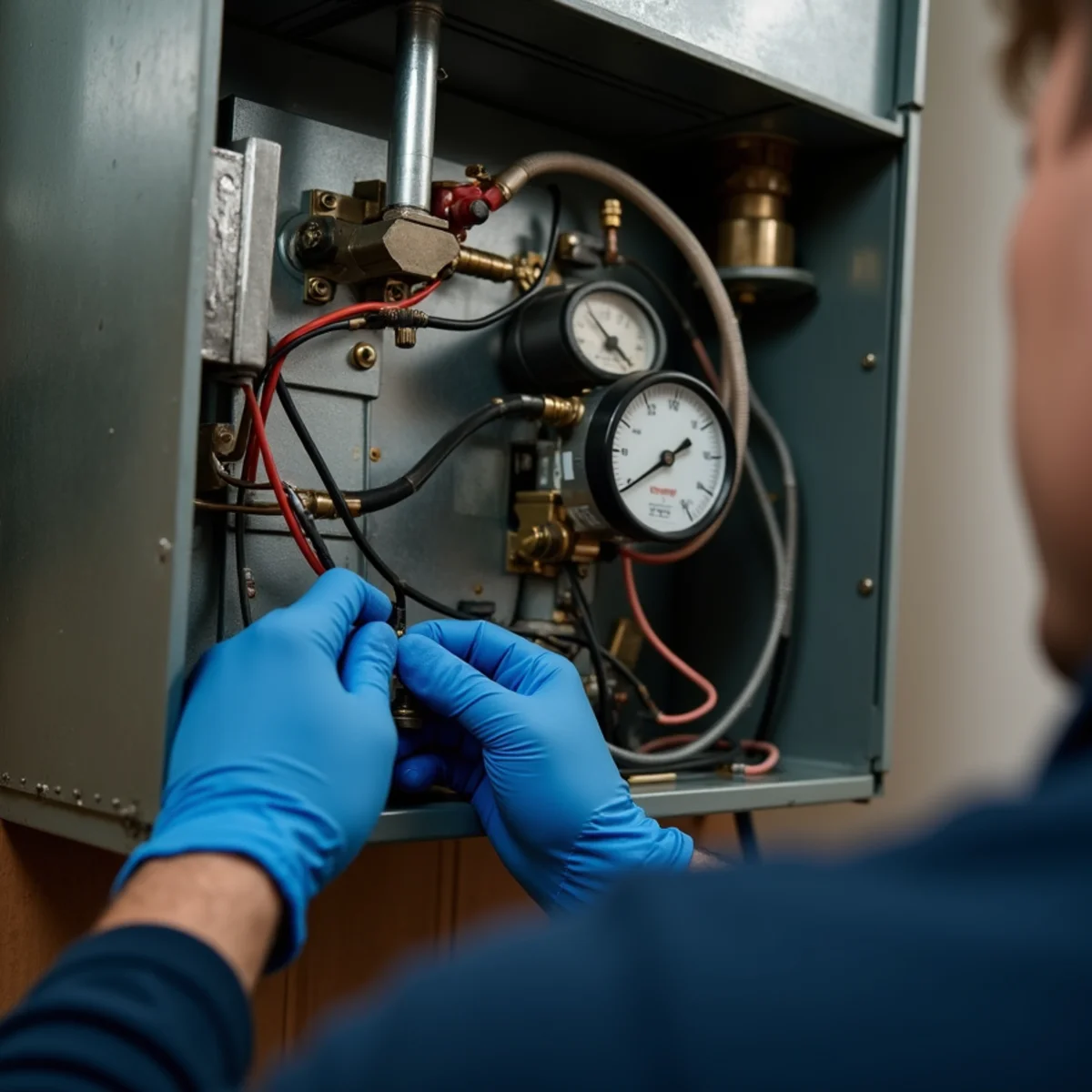
Ignitor resistance, flame-sensor microamps, pressure-switch readings, and limit controls get measured, not guessed.
4
Written repair option
You approve the price and scope before we install a single part. If replacement makes more sense, you get that comparison too.
5
Repair, test, and document
We complete the fix, run a full heat cycle, verify temperature rise, and leave you the readings.
Older Newburgh systems need a careful hand
A new part won't fix an undersized or leaky duct system, and swapping a board won't cure airflow starved by a filter nobody changed since spring. On the furnaces feeding additions and converted attics common across the broader Orange County service area, we check static pressure and temperature rise so the repair actually holds. If your furnace keeps shutting off, the real culprit is often airflow or a lazy flame sensor, not the expensive board a parts-swapper wants to sell you.
Gas furnaces: ignitors, flame sensors, gas valves, pressure switches, inducer motors, control boards
We stock the fast-movers on the truck, so a routine repair usually gets your heat back the same day rather than leaving you waiting on an order.
Gas, oil, and electric — each fails its own way
Diagnosing a furnace starts with knowing what you're standing in front of. Gas furnaces most often stumble at ignition — a hot-surface ignitor that's cracked, a flame sensor coated in oxidation, or a pressure switch that won't close because the vent or condensate line is blocked. Oil furnaces are a different animal: soot builds on the electrodes, the nozzle clogs and sprays a lazy flame, the cad cell stops seeing the fire, and the primary control locks out. Electric furnaces rarely quit dramatically but lose elements one at a time, so the house just never gets warm enough while the bill climbs. Bringing the wrong parts to the wrong furnace wastes a trip, which is why we ask about fuel type when you call.
Our climate makes all of this worse at the worst time. A furnace that limped through November on a marginal ignitor gives up the first morning it drops into the teens and has to run for hours straight. That's why so many no-heat calls cluster on the same cold snap — the equipment was already tired, and the cold finished the job. A same-day repair keeps a minor part failure from turning into a night without heat and pipes at risk.
Repairs we make to last
We'd rather fix the cause than reset the symptom. If a limit switch keeps tripping, we look at why the furnace is overheating — a slipping blower, a restricted return, or a filter nobody has changed since spring — instead of just replacing the switch and handing you the same problem in a month. If an ignitor failed early, we check the gas pressure and cycling that cooked it. That approach means fewer callbacks and a furnace that actually finishes the winter. When a repair genuinely isn't worth it on an aging unit, we tell you plainly and put the furnace installation numbers next to the repair so the choice is yours, made on facts rather than pressure.
No heat right now?
Call +1 (327) 210-5999 and tell us the symptom — we'll get a technician moving.
HVAC Newburgh NY · 48 Carter St, Newburgh, NY 12550
Furnace repair across Newburgh & the Hudson Valley
Most of our furnace repair calls come from the forced-air suburbs that ring the city — the split-levels and postwar ranches where gas and oil furnaces do the heavy lifting. We cover the Town of Newburgh neighborhoods of Gardnertown and Orange Lake, run daily into New Windsor and Cornwall, and answer no-heat calls throughout the wider Orange County area. These homes tend to share the same failure points — tired ignitors, dirty flame sensors, and airflow choked by a forgotten filter — so we stock the fast-movers and usually restore heat on the first visit, whatever corner of the Town or City you're in.
Ready for honest, upfront pricing? Call your Newburgh HVAC pros
Furnace Repair in Newburgh and across Orange County — fast scheduling, EPA 608–certified techs, and a written quote before any work. No pressure, no surprises.
Precision furnace repair by HVAC Newburgh NY — done right the first time.
Why choose HVAC Newburgh NY
Same-day no-heat response
When the furnace is dead and the forecast is in the teens, we prioritize the call. Average 60–90 minute response across the City and Town of Newburgh.
All three fuel types
Gas, oil, and older electric furnaces all fail differently. We carry the igniters, nozzles, sensors, and control boards that match Newburgh's mixed housing stock.
Diagnose before we quote
We test the ignition sequence, safety controls, and airflow first, then hand you a written repair option. No parts get swapped on a hunch.
Honest repair-or-replace advice
If a cracked heat exchanger or a failing 20-year-old unit makes repair a bad bet, we say so — and show you the numbers behind it.
What affects the price
We don’t post fake flat rates — every job is quoted in writing after we see it. Here’s what moves the number for furnace repair in Newburgh:
Fuel type — gas, oil, or electric parts and labor differ
The failed component (a flame sensor costs far less than an inducer motor or gas valve)
Whether the part is a stocked fast-mover or a special order
Age of the furnace and parts availability for older models
Emergency, after-hours, or holiday timing
Accessibility of the unit — tight basement, crawlspace, or attic installs
Any airflow or venting correction needed to make the repair hold
Furnace Repair FAQs
During cold snaps we prioritize no-heat calls and average a 60–90 minute response across the City and Town of Newburgh. Call +1 (327) 210-5999 and describe the symptom so we bring the right parts.