
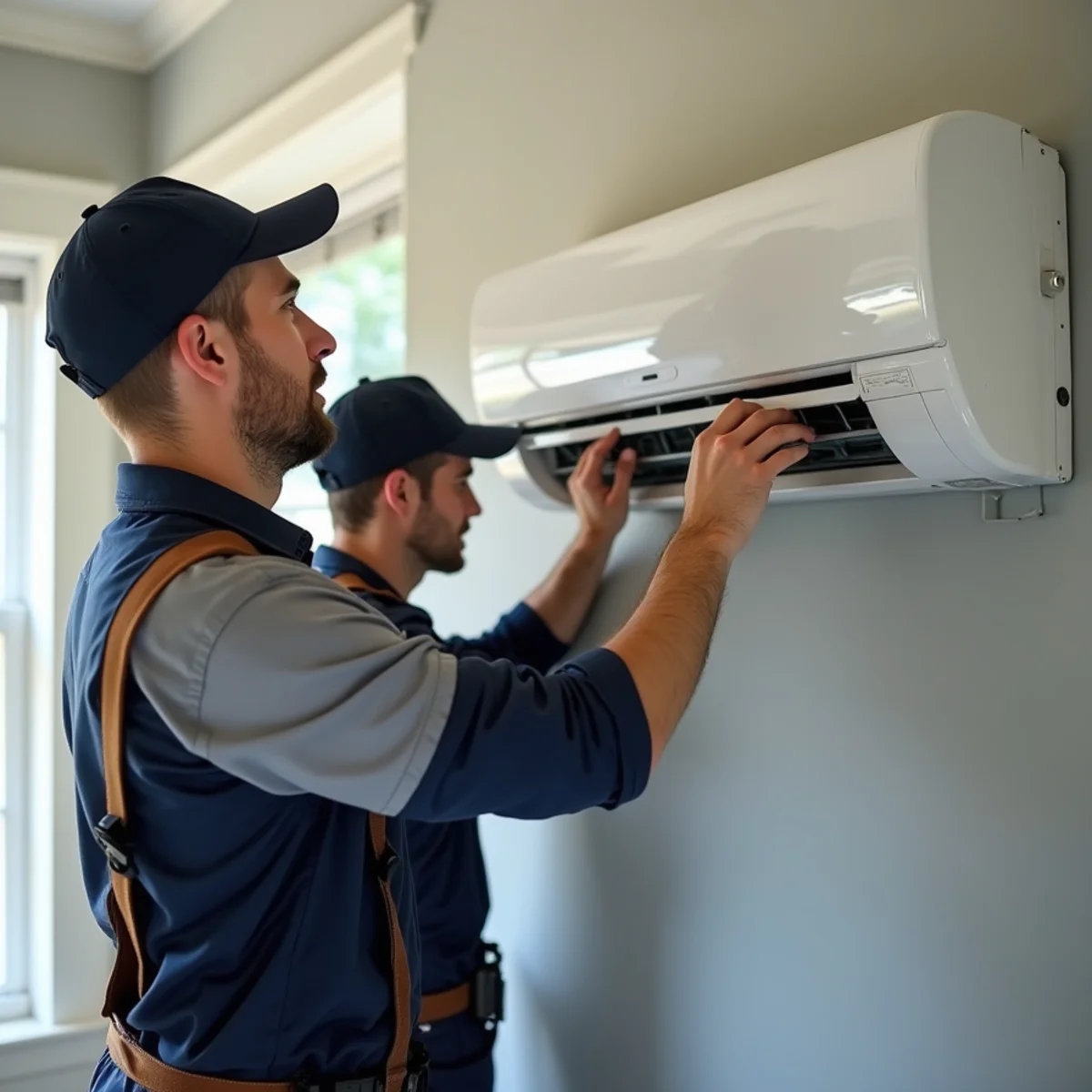
Ductless mini-splits are the go-to upgrade for Newburgh's no-duct rowhouses. Here's an honest, per-zone breakdown of what a whole-home system actually costs.
Walk through the older neighborhoods of Newburgh and you'll find hundreds of homes with a common problem: no ductwork. These narrow rowhouses and historic single-families were built for radiators and window units, and there's nowhere to run the big trunk lines a central system needs. That's why ductless mini-splits have become the marquee retrofit here — they heat and cool without ducts, one zone at a time. The question everyone asks is what a whole-home system costs. Here's the honest breakdown.
Pricing starts with the zone
Mini-splits are priced by the zone — each indoor head paired to an outdoor compressor. In our area, a single professionally installed zone commonly runs in the roughly $3,000 to $6,000 published local range, and it varies with the equipment, the head style, and how difficult the install is. A whole-home system is essentially several zones combined, either on separate outdoor units or on a single multi-zone compressor that feeds multiple indoor heads.
Why the per-zone range is wide
A simple wall-mounted head on an exterior wall with an easy line-set run sits at the low end. A concealed or ceiling-cassette head, a longer refrigerant line through finished walls, or a cold-climate compressor pushes toward the top. The equipment and the labor both move the number.
What a whole rowhouse typically needs
Most Newburgh rowhouses are two or three stories, tall and narrow. A typical whole-home layout might use a head for the main living floor, one or two for bedrooms upstairs, and sometimes one for a finished basement or top-floor space. Three to four zones covers many of these homes, and multi-zone systems let several heads share one outdoor unit — which saves both money and exterior space, a real consideration on a tight urban lot.
- Compact one-bedroom or single-floor unit — often one to two zones.
- Typical two- to three-story rowhouse — commonly three to four zones.
- Larger single-family with distinct wings — four or more zones, sometimes on multiple compressors.
What drives your total price
Number and type of heads
Each additional zone adds equipment and labor. Head style matters too: standard wall-mounted units are the most economical, while recessed ceiling cassettes and low-profile concealed units cost more but disappear into the room — a popular choice where homeowners don't want a visible unit on a historic wall.
Single-zone vs multi-zone design
Multiple single-zone systems give you independent, redundant units but mean several outdoor compressors. A multi-zone system runs several heads off one compressor, saving space and often money, though all those heads share one unit. On a narrow lot with limited yard, the multi-zone design is frequently the better fit.
Line-set runs and electrical
- Longer refrigerant line sets through finished walls add labor and materials.
- Older rowhouses may need electrical panel work to power the new equipment.
- Clean, concealed line routing costs more than an exposed run but looks far better on a historic facade.
Cold-climate equipment
For a system that heats through a Hudson Valley winter, you want true cold-climate heat pumps rated to perform at low temperatures. They cost a bit more up front than a basic cooling-focused unit, but they let the mini-split carry real heating load — which is the whole point in a house you want warm in January.
Sizing done right — Manual J, not guesswork
The most expensive mini-split is an oversized one that short cycles, never dehumidifies properly, and wears out early. We size every system with a room-by-room ACCA Manual J load calculation instead of eyeballing square footage. In the tight rooms of a Liberty Street / Quality Row rowhouse, right-sizing is the difference between quiet, even comfort and a unit that fights the space. Our ductless mini-split team handles the load calc, the zone plan, and clean line routing as one job.
And don't forget the incentives. Cold-climate mini-split heat pumps often qualify for NYS Clean Heat and Central Hudson rebates plus federal tax credits, which can meaningfully lower the whole-home total. We'll fold the current, verified numbers into your quote so you see the real out-of-pocket cost, not just the list price. If you're also weighing central options, our heat pump services team can compare the approaches for your specific home.
For a no-duct Newburgh rowhouse, a mini-split isn't a compromise — it's the right tool for the building. It also lets you phase the work if the budget is tight: start with the zones you use most, like the main living floor and the primary bedroom, and add heads later without tearing anything out. Priced by the zone, sized with a real load calc, and paired with the rebates on offer, whole-home comfort in an old house is more attainable than most owners expect — and far less disruptive to install than the ductwork a central system would demand.
Wondering what a mini-split would cost for your rowhouse?
Get a per-zone quote with rebates folded in. Call HVAC Newburgh NY at +1 (327) 210-5999 — we specialize in ductless retrofits for Newburgh's older homes.
HVAC Newburgh NY · 48 Carter St, Newburgh, NY 12550
Whole-home mini-split scope by home type (Newburgh)
| Home type | Typical zones | Planning note |
|---|---|---|
| Compact one-bedroom or single floor | 1–2 zones | Per zone commonly $3,000–$6,000 installed |
| Two- to three-story rowhouse | 3–4 zones | Often share one multi-zone compressor to save space and cost |
| Larger single-family with distinct wings | 4+ zones | May need more than one outdoor compressor |
| Any of the above with rebates | Same zones | Clean Heat, Central Hudson, and federal credits lower the net |
Frequently asked
A single professionally installed zone commonly runs in the roughly $3,000 to $6,000 published local range, varying with the equipment, head style, and install difficulty. A whole-home system combines several zones, often on a shared multi-zone compressor that lowers the per-zone cost.