
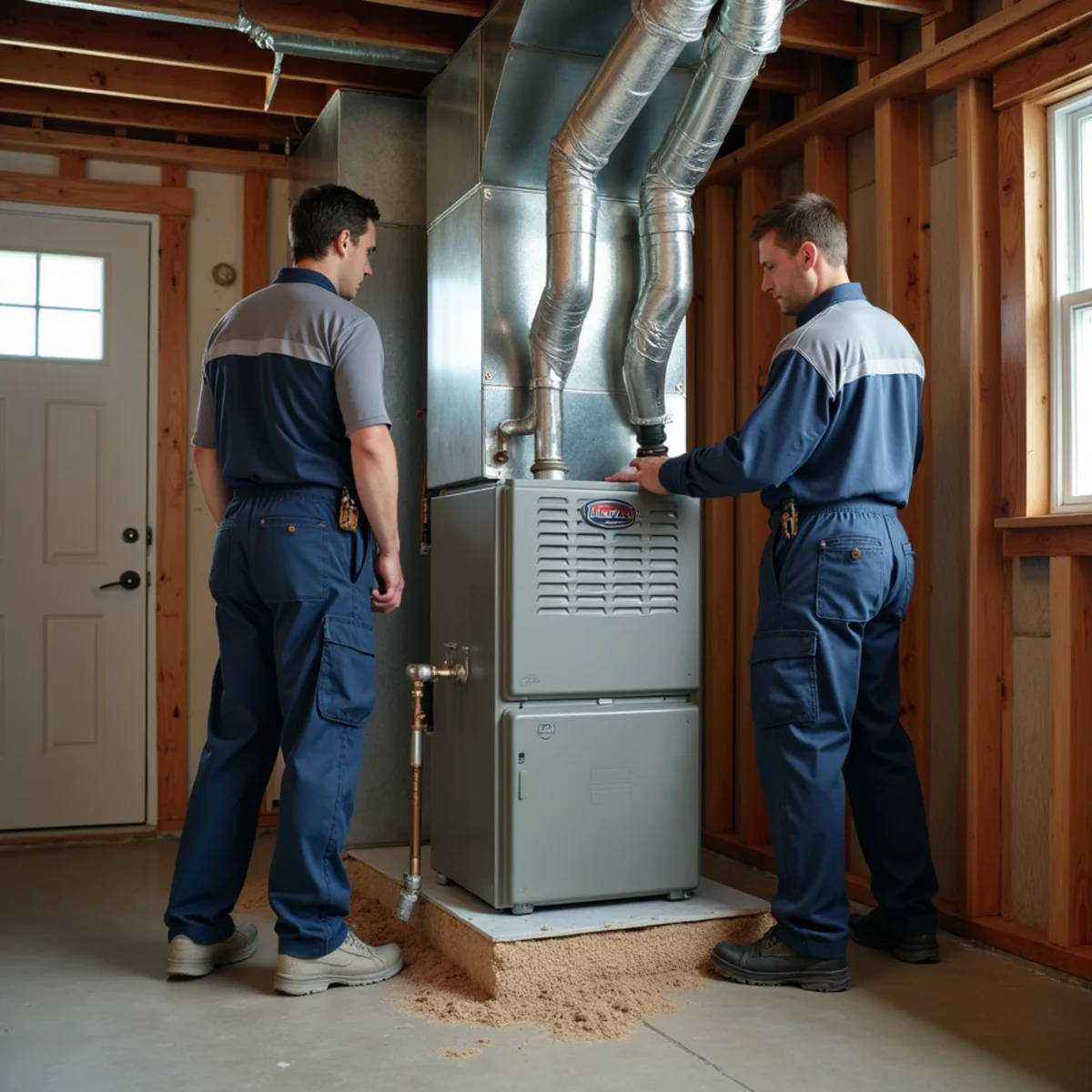
Homes near Quassaick and Moodna Creek know the risk: a heavy rain, a fast thaw, and water in the basement. If your furnace sits on that floor, here's how to protect it — and why a soaked unit should never be relit.
If you live near Quassaick Creek on Newburgh's north side, or anywhere the Moodna winds through the area, you already know the drill. A slow-moving storm, a rapid spring thaw over frozen ground, or a nor'easter dumping rain on top of snow, and the basement takes on water. It's a Hudson Valley reality. And for the many local homes with the furnace, boiler, and water heater all sitting on the basement floor, that water isn't just a cleanup headache — it can total the heating system in one afternoon.
A flooded furnace is one of the more expensive and dangerous outcomes of a basement flood, and it's also one of the most preventable. Here's how the damage happens, how to guard against it, and what to do the moment water touches your equipment.
Why floodwater destroys a furnace
A furnace is a mix of electronics, gas controls, and metal that water ruins in specific ways. Floodwater — especially the silty, contaminated water that comes up through a basement — soaks the control board and wiring, corrodes the gas valve and burners, and clogs the safety controls with grit. Even after everything dries, corrosion keeps working inside the components for weeks. The gas valve is the real hazard: once it's been submerged, it can fail to seat properly and leak gas, which is why manufacturers and safety agencies are unanimous that flood-soaked furnaces and their controls must be professionally evaluated, and usually replaced, not simply dried out. Boilers and water heaters standing alongside it face the same fate — once their gas controls and burners have been under contaminated water, they can't be trusted to fire safely either.
Never relight a furnace that's been underwater
If floodwater has reached your furnace or boiler, do not try to turn it back on. Shut off the gas or fuel supply and the electrical power to it if you can do so safely, keep it off, and call a technician. A submerged gas valve or control can leak gas or fail dangerously. If you smell gas at any point, leave the house and call from outside.
How to protect a basement furnace before the next storm
Prevention is far cheaper than replacement, and there are several proven ways to keep water away from your heating equipment:
- Raise the furnace onto a concrete housekeeping pad or a steel stand so the controls sit above expected flood levels
- Install and maintain a sump pump with a battery backup — power often fails during the storms that flood basements
- Add a water alarm near the furnace that alerts you the moment water arrives
- Keep floor drains clear and grade soil away from the foundation so water sheds away from the house
- Relocate the furnace or its controls higher up the wall, or move the system entirely, in chronically wet basements
- Seal foundation cracks and consider a backwater valve if sewer backup is part of your flood risk
Even a modest raise onto a pad can be the difference between a furnace that survives a few inches of water and one that's a total loss. When we handle a furnace installation for a home in a flood-prone spot, elevating and protecting the unit is part of the plan from the start, not an afterthought.
What to do right after a flood
- 1
Stay safe first
Don't enter a flooded basement with standing water if the electrical panel or outlets are submerged — water and electricity together are lethal. Get the power cut at the meter if you can't safely reach the panel.
- 2
Shut off the fuel and power to the furnace
Turn off the gas or oil supply valve and the dedicated electrical circuit to the heating equipment, if you can reach them without wading through energized water.
- 3
Don't run it
Leave the furnace, boiler, and water heater off. Running or relighting flood-damaged equipment risks gas leaks, electrical faults, and fire.
- 4
Document and call
Photograph the water line and the equipment for your insurer, then call a technician to evaluate what can be salvaged and what must be replaced.
Insurance and replacement
Whether a flooded furnace is covered depends on your policy — standard homeowners insurance often excludes flood damage, which is covered separately, while a burst pipe or appliance leak may be treated differently. It's worth understanding the distinctions before you need them; we walk through this in our guide to homeowners insurance and furnace damage. When replacement is the answer, we help document the loss and get your heat restored quickly.
We serve the flood-aware neighborhoods along the creeks, including Northside near Quassaick Creek, and we've pulled more than a few soaked furnaces out of basements after a bad storm. If your heating equipment sits low in a basement that's taken water before, don't wait for the next event to think about protection. A pad, a backup sump, and a water alarm are a small investment against a very expensive loss.
Need a hand from a local tech?
Call for same-day service across Newburgh and the Hudson Valley, or request a free written estimate.
HVAC Newburgh NY · 48 Carter St, Newburgh, NY 12550
Ways to protect a basement furnace from flooding
| Protection measure | What it guards against | Effort and cost |
|---|---|---|
| Raise the furnace on a concrete pad or steel stand | A few inches of floodwater reaching the controls | Low cost, high payoff |
| Sump pump with battery backup | Water rising when grid power fails mid-storm | Moderate; essential in a wet basement |
| Water alarm near the equipment | Not knowing water arrived until damage is done | Low cost, easy to add |
| Clear floor drains and grade soil away | Water pooling against the foundation | Low cost, seasonal upkeep |
| Relocate the furnace or its controls higher | Repeat losses in a chronically wet basement | Higher; best done during a replacement |
| Backwater valve and sealed foundation cracks | Sewer backup and seepage | Moderate; professional install |
Frequently asked
Rarely, if floodwater reached the burners, controls, or gas valve — those components corrode and the gas valve can fail dangerously, so they usually must be replaced, not dried out. A technician has to evaluate it. Never relight a furnace that's been underwater; shut off its fuel and power and call for service.