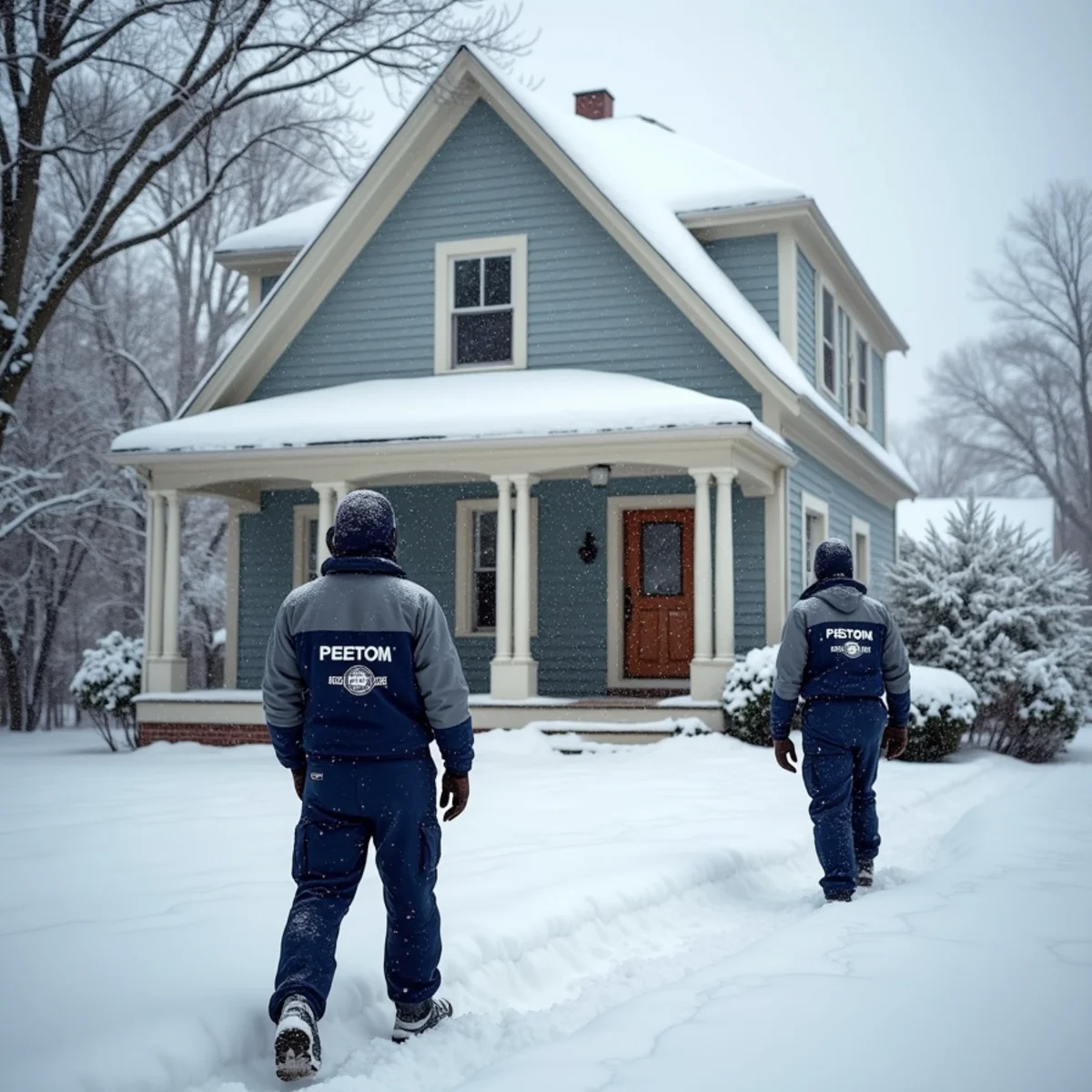
The furnace quits, the wind is howling off the Hudson, and the house is dropping a degree every twenty minutes. Here is the exact order of moves to make before help arrives.
It is 9 p.m., the snow is coming in sideways off the river, and your furnace just went silent. The thermostat still glows but the vents are cold, and you can already feel the house cooling. Within an hour the temperature inside starts to slide, and by 2 a.m. your pipes are the ones in danger. A no-heat call during a nor'easter is the most stressful moment a Newburgh homeowner faces all winter — and the worst time to be searching around for what to do.
So let's fix that now. Below is the plan we give our own neighbors: what to check, what to leave alone, and how to protect the house while a technician is on the way.
First: rule out the simple stuff
A surprising number of "dead furnace" calls end at the electrical panel or the thermostat. Before you assume the worst, spend five minutes here — you may save yourself a service visit entirely.
- 1
Check the thermostat
Confirm it is set to HEAT and the target is above room temperature. Swap the batteries if the screen is dim. A blank screen after a power blip is common.
- 2
Check the furnace switch
Most systems have a standard light-switch on or near the unit that looks exactly like a wall switch. A cleaning crew or a curious kid flips it more often than you'd think.
- 3
Check the breaker
Find the furnace or "heat" breaker in your panel. If it tripped, reset it once. If it trips again immediately, stop — that is a fault, not a fluke, and it needs a pro.
- 4
Check the filter
A filter clogged solid can trip the high-limit safety and shut the unit down. If it is gray and matted, replace it and give the furnace fifteen minutes to reset.
Smell gas or exhaust? Stop here.
If you smell rotten eggs, a sharp chemical odor, or exhaust fumes, do not touch switches or relight anything. Get everyone outside, leave the door open, and call the gas utility and 911 from outdoors. Carbon monoxide is odorless — if a CO alarm sounds, treat it the same way.
If it still won't run: protect the house
Once you've confirmed it isn't a tripped switch or a dead battery, shift your energy to holding heat and protecting plumbing until a technician arrives. In a Hudson Valley cold snap, that second job matters as much as the repair.
Trap the heat you have
- Close off unused rooms and keep everyone in one central space.
- Hang blankets over drafty windows and put a rolled towel at the bottom of exterior doors.
- Layer up — hats and wool socks hold body heat better than cranking a space heater.
Guard your pipes
- Open the cabinet doors under kitchen and bathroom sinks so warmer room air reaches the supply lines.
- Let a pencil-width trickle run from the faucet farthest from your main — moving water resists freezing.
- Know where your main shutoff is, so if a pipe does burst you can stop the flood in seconds.
Space heaters: safe if you respect them
Plug electric heaters straight into the wall, never a power strip, and keep a three-foot clear zone around them. Never use an oven, grill, or generator indoors for heat — that is the fastest route to a carbon monoxide tragedy during a storm outage.
When to stop troubleshooting and call
Call for emergency furnace repair the moment you hit any of these: the breaker trips again after one reset, you see error codes flashing on the control board, the burner tries to light and fails repeatedly, or the indoor temperature is falling toward the 50s with no sign of recovery. During a nor'easter, waiting until morning can turn a $200 repair into a burst-pipe cleanup that costs thousands.
We keep our trucks stocked for the failures that actually happen here — igniters, flame sensors, pressure switches, and control boards on the gas furnaces common across the Town of Newburgh. Because we are local, our average emergency response runs 60 to 90 minutes across the City and Town, even when the plows are still catching up. If you also heat with a boiler and radiators, our emergency HVAC line covers that too.
What happens when the tech arrives
A good no-heat visit is methodical, not guesswork. Your technician confirms the safety chain first — gas pressure, venting, CO — then reads the control board's diagnostic codes and traces the failure to a single component. Most no-heat calls come down to one worn part, and we carry the common ones, so a large share of storm-night furnaces are running again before we leave the driveway.
The homeowners who ride out nor'easters best are the ones who booked a fall tune-up — a clean flame sensor and a tested igniter are the two cheapest insurance policies in heating. When the failure has already happened, skip the regret and work the plan above.
No heat right now in Newburgh?
Don't wait out a nor'easter in a cold house. Call HVAC Newburgh NY at +1 (327) 210-5999 for fast emergency furnace repair across the City and Town — average 60 to 90 minute response, day or night.
HVAC Newburgh NY · 48 Carter St, Newburgh, NY 12550
- Work the five-minute checklist first: thermostat mode and batteries, the furnace switch, the breaker, and the filter clear a real share of no-heat calls.
- Reset a tripped breaker once only. If it trips again immediately, that is a fault — leave it off and call.
- Any smell of gas, exhaust, or a sounding CO alarm ends troubleshooting: everyone outside, then call the utility and 911 from the yard.
- While you wait, split the job in two — trap the heat you have in one central room, and protect the plumbing so a cold night does not become a burst pipe.
- Plug space heaters straight into the wall, keep a three-foot clear zone, and never burn fuel indoors for heat.
- Call for emergency service once the temperature is sliding into the 50s with no recovery — waiting until morning is how a $200 fix turns into a flood.
- The cheapest storm night is the one a fall tune-up prevented: a clean flame sensor and a tested igniter are the two best insurance policies in heating.
Frequently asked
During a Hudson Valley cold snap it is an emergency. Once indoor temperatures fall into the 40s, your pipes are at risk of freezing and bursting, which is far more expensive than the original repair. If you cannot restore heat in the first hour, call for emergency service rather than waiting.