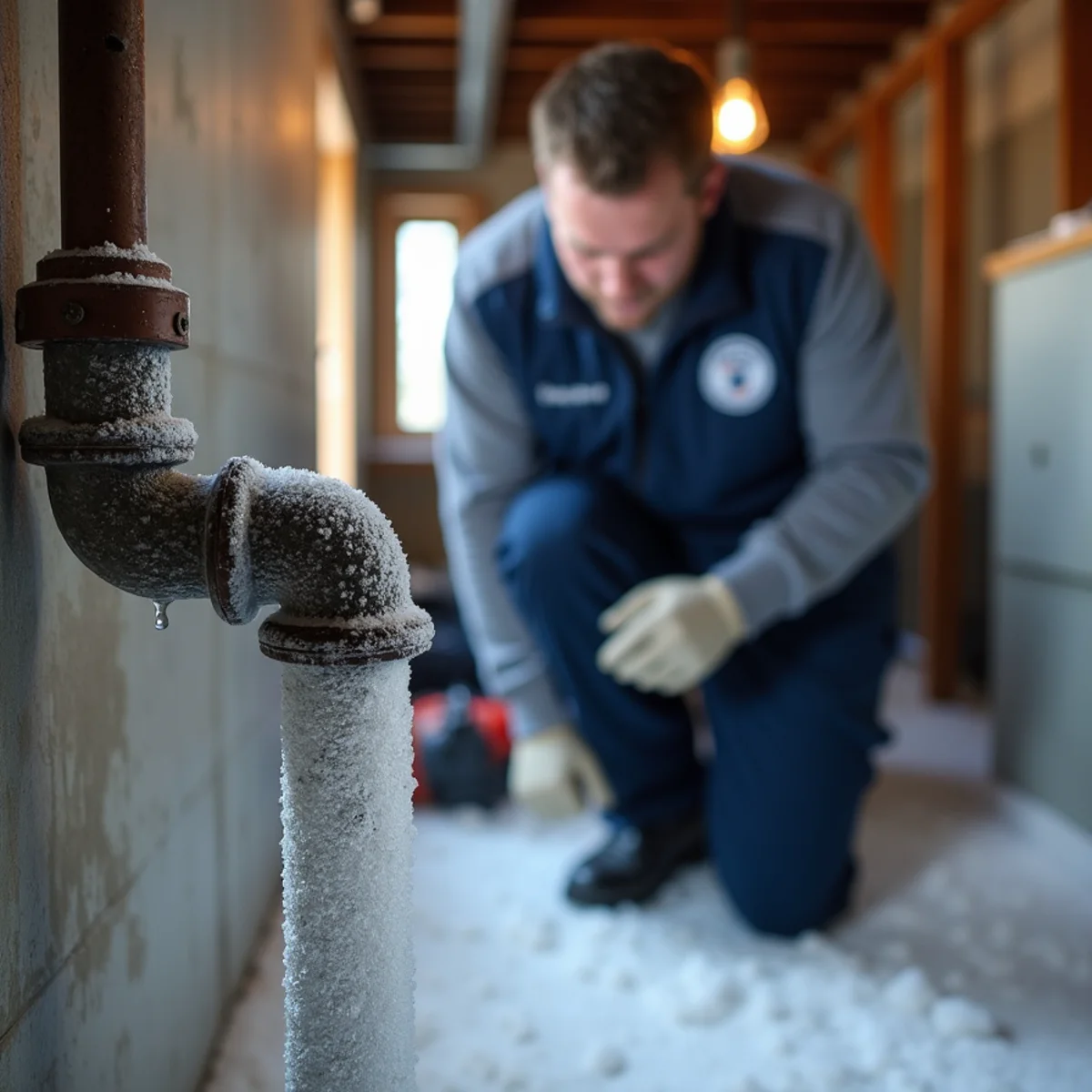
When the heat is out and a pipe is already frozen, the next sixty minutes decide whether you get a thawed line or a flooded floor. Here's exactly what to do.
You turned on the tap and nothing came out but a groan. The heat is off, the house is cold, and somewhere in the wall or the basement a pipe has frozen solid. Here's the hard truth: a frozen pipe isn't the emergency — the burst that follows the thaw is. Ice expands, splits the pipe, and the split doesn't leak until the water starts flowing again. That means the choices you make in this first hour matter more than almost anything else.
Stay calm and move deliberately. This is the sequence that protects your home.
Minute one to five: shut off the risk
- 1
Find your main water shutoff
It's usually where the water line enters the house, often in the basement near the front wall. Know this spot cold — if a pipe bursts, closing it is the difference between a puddle and a flood.
- 2
Open a faucet on the frozen line
Open the tap the frozen section feeds, both hot and cold. This relieves pressure and gives melting ice somewhere to go, which dramatically lowers burst risk.
- 3
Leave the main ON for now
Unless you already see a leak or split, keep the main open so you can tell when the line thaws — flow returning is your all-clear signal. If you see water spraying or dripping, shut the main immediately.
Never thaw a pipe with an open flame
No torches, no propane heaters aimed at pipes, no lighters. Open flame near old framing is a house fire waiting to happen, and it can burst the pipe from thermal shock. Use only gentle, controlled heat.
Minute five to thirty: thaw safely
Once pressure is relieved, warm the frozen section slowly. Start at the faucet end and work back toward the cold spot, so meltwater can escape instead of getting trapped behind more ice.
- Use a hair dryer, a heat gun on low, or a space heater kept a safe distance from anything flammable.
- Wrap accessible pipes in warm, wet towels and refresh them as they cool.
- Open cabinet doors and interior doors to push whatever household warmth you have toward the cold pipe.
- If the pipe is inside a wall and you can't reach it, keep the room as warm as possible and get a professional on the phone.
Watch for the split as it thaws
Stay next to the pipe as it warms. The moment ice releases, a hidden crack starts flowing. If you see a spray or a bead of water form, shut the main immediately — you just caught a burst before it flooded the house.
Meanwhile: get the heat back
Thawing one pipe while the house is still freezing is a losing battle — the next pipe is already on the clock. The permanent fix is heat, so get a technician moving in parallel. Call for emergency HVAC service while you work the pipe, especially in the Northside / Quassaick Creek area and other older sections of the city where uninsulated basement runs and exterior-wall plumbing freeze fastest.
Whether the outage traces back to a furnace, a boiler, or a heat pump, restoring heat is what actually ends the frozen-pipe threat. If the failure is a furnace, our emergency furnace repair crew carries the common no-heat parts and can usually have you running the same visit.
If a pipe has already burst
- Shut the main water valve immediately.
- Open faucets to drain the remaining water and reduce pressure.
- Move belongings and electronics away from the water, and kill power to any affected outlets at the breaker if it's safe to reach.
- Call a plumber for the pipe and an HVAC technician for the heat — you need both, and you need them tonight.
Why the first hour is everything
Water damage compounds fast. A pipe that bursts unnoticed at 2 a.m. can put hundreds of gallons through your ceilings before dawn, and once drywall, insulation, and flooring get soaked, you're looking at mold remediation on top of the plumbing and heating repairs. The homeowners who come through a hard Hudson Valley freeze with a simple thaw — not a claim — are the ones who found the shutoff early, relieved pressure at the faucet, and got heat moving instead of only chasing the ice. Do those three things and you've already won the hour.
Once the crisis passes, deal with the root cause so it doesn't repeat. Insulate the pipes that froze with foam sleeves, seal the drafts feeding those cold spots, and keep exterior-wall cabinets cracked open during deep freezes. Then put a fall heating tune-up on the calendar so the system is reliable when the next Arctic blast rolls through. The cheapest frozen pipe is the one that never freezes, and a little prevention beats a 2 a.m. emergency every time.
No heat and pipes freezing?
Get heat back before the next pipe goes. Call HVAC Newburgh NY at +1 (327) 210-5999 for emergency service across the City and Town — average 60 to 90 minute response.
HVAC Newburgh NY · 48 Carter St, Newburgh, NY 12550
- The frozen pipe is not the emergency — the burst that follows the thaw is. Ice splits the pipe, and the split does not leak until water flows again.
- Find your main shutoff first and know it cold; closing it fast is the difference between a puddle and a flood.
- Open the faucet the frozen line feeds, both hot and cold, to relieve pressure and give melting ice somewhere to go.
- Leave the main on unless you already see a leak, so returning flow tells you the line has thawed.
- Thaw slowly with a hair dryer, heat gun on low, or a safely placed space heater — never an open flame near old framing.
- Warm the pipe from the faucet end back toward the ice so meltwater escapes instead of getting trapped.
- Restore whole-house heat in parallel — thawing one pipe while the house keeps freezing is a losing battle, so get a technician moving while you work the line.
Frequently asked
Leave the main on but open the affected faucet, so you'll know the moment the line thaws and can spot a leak instantly. The exception: if you already see a crack, drip, or spray, shut the main right away. Keep your hand near that valve while you thaw.