
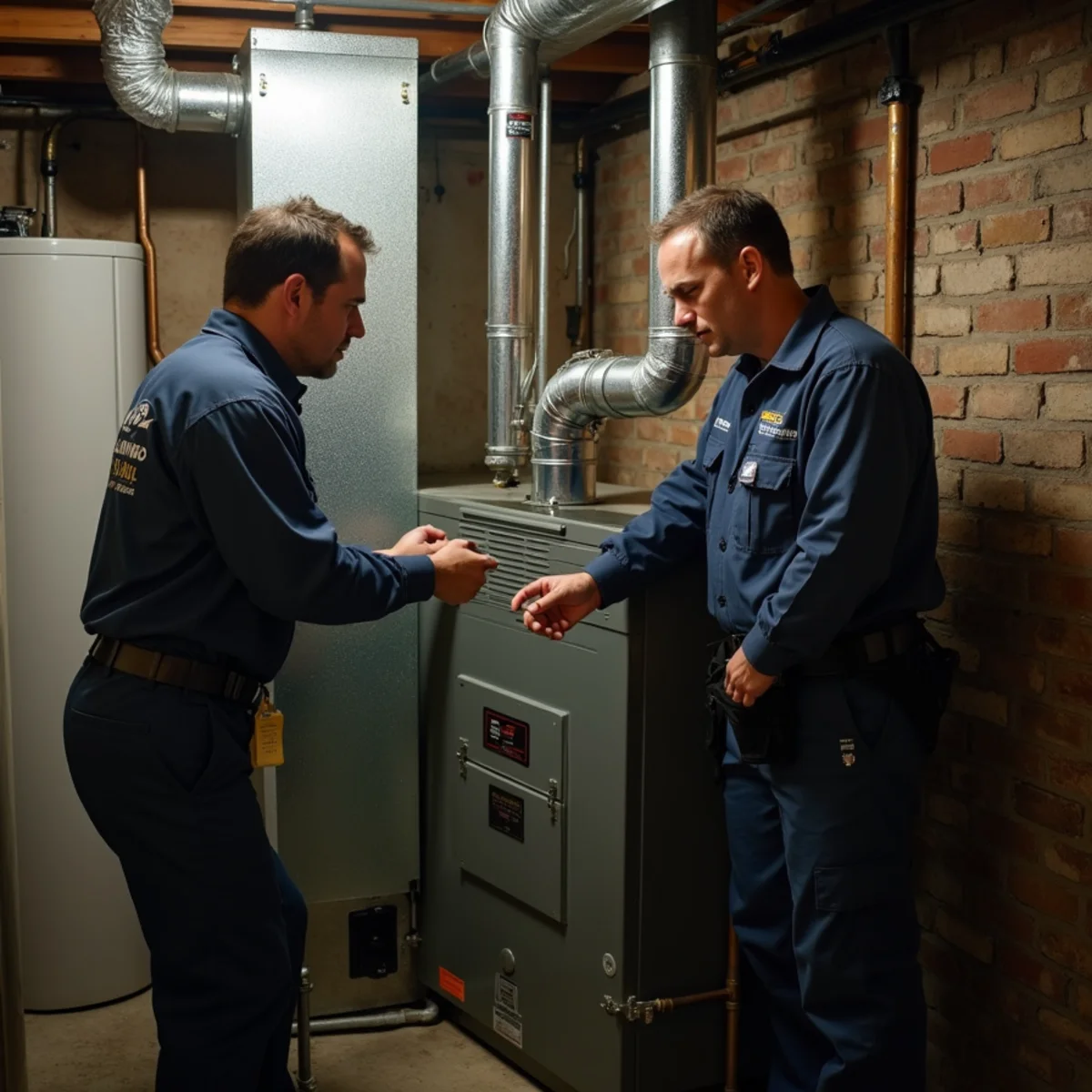
A dead boiler puts an entire water-filled heating system at risk of freezing. Here's how to keep your radiators and pipes safe until a technician reaches you.
The radiators are stone cold and the boiler in the basement is silent. In a Newburgh home heated by hot water or steam, that silence is a countdown. Unlike a forced-air furnace, a boiler system is full of water — in the boiler, in the loops, in every radiator and every foot of pipe running through unheated basements and exterior walls. When the heat stops, all of that water starts trending toward freezing. A frozen loop doesn't just kill your heat; it cracks cast iron and splits copper, turning a repair into a flood.
The good news: you have real moves to make tonight. Here's the order that keeps a dead-boiler night from becoming a burst-pipe morning.
Confirm it is actually the boiler
- 1
Check for power and the switch
Boilers have an emergency shutoff switch — often a red plate at the top of the basement stairs or beside the unit. Confirm it is ON, and check that the breaker hasn't tripped.
- 2
Read the pressure gauge
A healthy residential system usually shows around 12 to 15 psi cold. If the needle sits near zero, the system has lost water and a low-water cutoff has likely locked the boiler out for safety.
- 3
Look for a reset button
Oil-fired boilers have a red reset on the burner. Press it ONCE. If it fails to fire or locks out again, stop — repeated resets flood the chamber with oil and create a hazard.
- 4
Check the thermostat and low-water cutoff
Confirm the thermostat is calling for heat, and note any warning light on the boiler's control. A blinking cutoff light means low water, not a thermostat problem.
One reset only
Never press an oil burner reset more than once. If it doesn't hold, unburned oil is pooling in the combustion chamber. Any smell of oil, gas, or exhaust means everyone goes outside and you call the utility and a technician — do not attempt another restart.
Protect the water in the system
This is the part unique to boiler homes, and it's where the real money is saved. Your job now is to keep the loops and pipes above freezing until the heat comes back.
Keep the radiators from freezing
- Do not drain the system unless a professional tells you to — a full loop that stays warm enough is safer than an empty one you can't easily refill.
- Open interior doors so household heat reaches rooms with radiators on exterior walls, especially older East End Historic District rowhouses where pipes run through cold party walls.
- If you have a wood stove or a working fireplace, use it to hold the main floor above 55 degrees.
Guard the vulnerable pipes
- Open sink cabinets and let a thin stream run at the farthest fixture, the same as you would in any hard freeze.
- Pay attention to the basement — boiler-fed pipes in an unheated cellar freeze first. A safely placed electric heater aimed at exposed piping buys time.
- Locate your main water shutoff now, while you're calm, so a burst is a thirty-second fix instead of a panic.
When to call — and why sooner is cheaper
Call for emergency boiler repair right away if the pressure reads zero, the burner won't hold after one reset, you see or hear water leaking near the unit, or the system is locked out on a safety. With a water-filled system, the cost of waiting is not measured in a colder night — it's measured in cracked sections and flooded floors. A boiler that freezes solid can be a full replacement instead of a repair.
Our trucks carry the parts that strand Newburgh boilers most often: circulator pumps, aquastats, low-water cutoffs, igniters, and zone valves. We work on gas and oil, steam and hot-water, from a 1990s cast-iron unit to the original systems still running in historic homes near Downing Park. If your home mixes heating types, our broader emergency HVAC coverage handles that in one visit.
What a technician does on arrival
We start with safety — combustion, venting, and water level — then diagnose why the boiler stopped. Often it's a seized circulator that never moved the hot water, a failed cutoff protecting the boiler from running dry, or an ignition fault on the burner. We restore heat, bring the system back to proper pressure, bleed any air out of the zones, and check that every radiator actually warms before we leave. Then we walk you through what failed and why, so the same problem doesn't blindside you next January.
Boilers rarely die without warning. Kettling sounds, slow-to-warm radiators, a pilot that won't stay lit, and pressure that creeps or drops are the early tells that something is going. If you caught this one after the fact, that's fine — work the steps above tonight to protect the house, and let's get real, reliable heat back in it. The goal isn't just to relight the boiler; it's to fix the reason it quit so you're not doing this again on the next cold night.
Boiler down in Newburgh tonight?
Protect your pipes and call HVAC Newburgh NY at +1 (327) 210-5999. We repair gas and oil boilers across the City and Town, with an average 60 to 90 minute emergency response.
HVAC Newburgh NY · 48 Carter St, Newburgh, NY 12550
Bottom line
A dead boiler is a countdown, not an inconvenience — the system is full of water that trends toward freezing the moment the heat stops. Confirm the emergency switch and breaker, read the pressure gauge (12 to 15 psi cold is normal, near zero means lost water and a safety lockout), and press an oil burner reset once and never again. Then protect the water: keep interior doors open, hold the main floor above 55 degrees, run a thin trickle at the farthest fixture, and aim a safe electric heater at exposed basement piping. Locate your main shutoff now, while you are calm. If pressure reads zero, the burner will not hold, or you see a leak, call for emergency boiler repair rather than resetting again — a frozen loop cracks cast iron and turns a repair into a replacement.
Frequently asked
A boiler system is full of water — in the unit, the loops, and every radiator and pipe. When it stops, all of that water can freeze, cracking cast iron and splitting pipes. A furnace failure risks only your comfort and plumbing; a boiler failure risks the heating system itself, so it demands a faster response.