
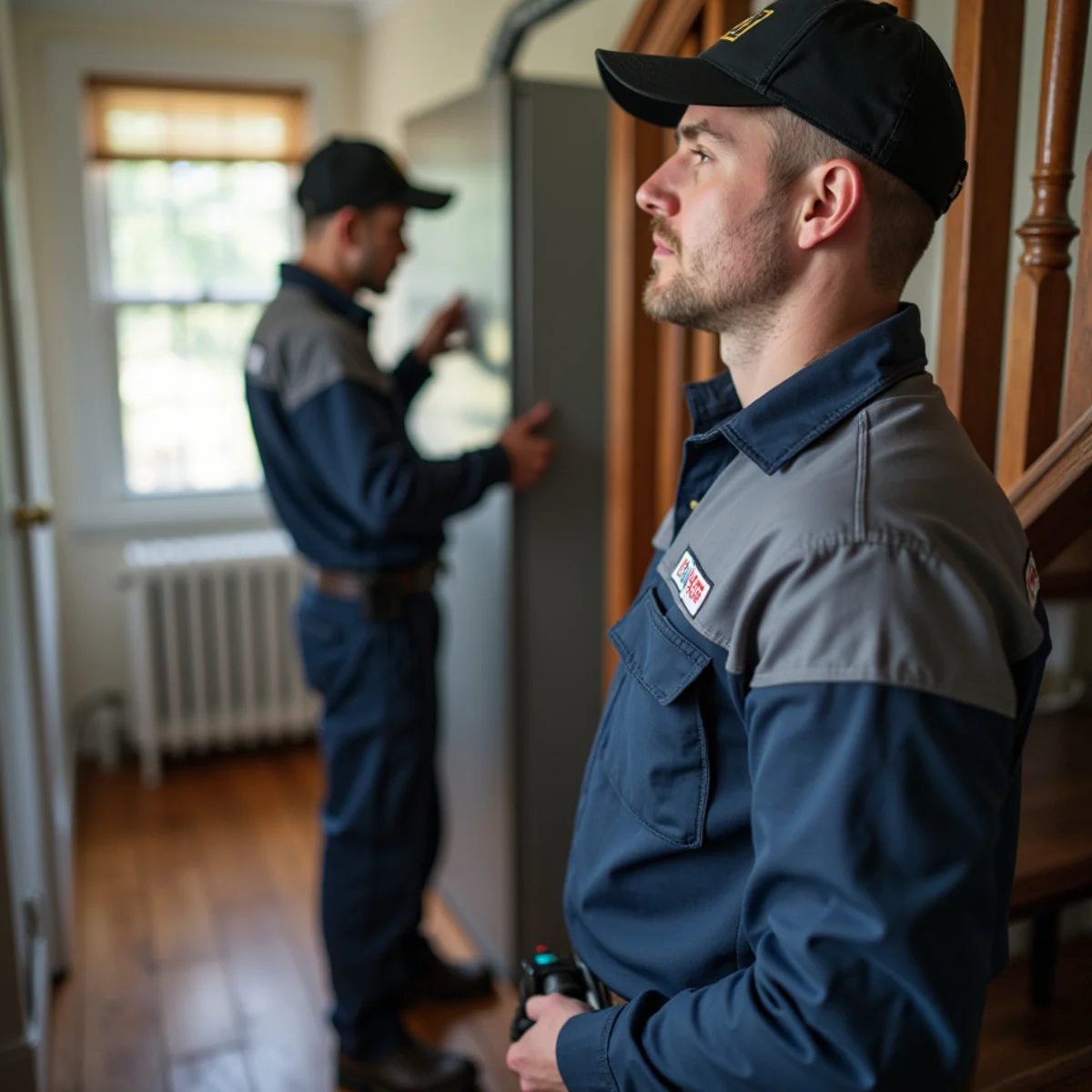
Newburgh is full of century-old homes running cast-iron radiators off a single boiler. Here is how often to bleed, flush, and service them so the whole house heats evenly.
Drive through the Grand-Montgomery Corridor and you are looking at homes built when radiators were the height of heating technology. Many still run on hot-water or steam boilers, and the good ones can last decades with the right care. The trouble is that these systems ask for a kind of maintenance that a modern forced-air homeowner never thinks about. Bleeding, flushing, and pressure checks are the difference between even warmth and a downstairs that roasts while the back bedroom stays cold.
How often to bleed your radiators
Bleeding releases air that collects at the top of a hot-water radiator and blocks the flow of heat. For most Newburgh homes, once a year at the start of the heating season is the baseline. Bleed more often if you notice the signs.
- A radiator that is warm at the bottom and cold at the top has trapped air and needs bleeding.
- Gurgling or knocking sounds when the system runs point to air in the lines.
- A room that will not warm up while others do is a classic air-lock symptom.
- If you keep having to add water to the boiler, air is entering the system and you may bleed several times a season until the leak is found.
How to bleed a hot-water radiator
- 1
Warm the system, then shut it off
Run the heat so air rises to the radiators, then turn the system off and let it settle for a few minutes so water is not surging.
- 2
Open the bleed valve slowly
With a radiator key or flat screwdriver, crack the small valve at the top corner. You will hear air hiss out. Keep a cup and rag under it.
- 3
Close when water runs steady
Once a steady stream of water replaces the hiss, close the valve. Move from the radiators closest to the boiler outward, and from lowest floor to highest.
- 4
Recheck boiler pressure
Bleeding releases water, so top the boiler back up to around 12 to 15 psi if the gauge dropped.
Steam radiators are not the same
Do not bleed a steam radiator the way you bleed a hot-water one. Steam systems use air vents that open and close automatically, and forcing them can cause spitting and burns. If you are not certain which system you have, a hot-water setup has a pressure gauge reading in psi and a steam setup has a sight glass showing the water line. When in doubt, ask a technician.
What a yearly boiler service should include
Bleeding is the homeowner's job. The annual service is where a technician handles what you cannot, and on an older boiler it is not optional. A thorough boiler service visit covers the safety and efficiency items that keep a decades-old unit running clean.
- Test the low-water cutoff, the safety that shuts a boiler down before it runs dry, on both steam and hot-water systems.
- Check the pressure-relief valve and expansion tank so the system can handle pressure swings safely.
- Inspect and clean the burners and check combustion for a clean, efficient flame.
- Flush sediment from a hot-water system or drain and skim a steam boiler to keep the water clean.
- Verify the circulator pump and controls on hot-water systems and the water level and vents on steam.
When bleeding is not enough
If you bleed a radiator and it goes cold again within days, air is getting back in, and that usually means a leak, a failing expansion tank, or a fill-valve problem. If a room stays cold no matter how often you bleed, the circulator or a stuck valve may be the culprit. And banging or hammering in a steam system, called water hammer, signals a pitch or condensate-drainage problem that can damage pipes. Those are the moments to bring in help rather than keep chasing the same cold radiator.
Getting the timing right
Book the annual service in early fall so the boiler is proven before the first freeze, and bleed your radiators as the heating season starts. Homeowners across the Grand-Montgomery Corridor and Newburgh's other historic blocks who keep to that rhythm get even heat and far fewer midwinter surprises. If your older boiler is showing its age with repeated repairs, our boiler repair team can walk you through whether another season of service or a replacement is the smarter money.
Signs your older boiler is near the end
A well-maintained cast-iron boiler can run a very long time, but nothing lasts forever. Watch for creeping fuel bills that a tune-up does not fix, rust or moisture pooling around the base, frequent pressure loss, or repairs that are starting to stack up season after season. None of those alone means replace it tomorrow, but together they are the system telling you to plan. The smart move is to have the replacement conversation during a calm fall service visit, with real numbers in front of you, rather than in a panic the night it finally quits in February.
A note on efficiency for old homes
Many of Newburgh's oldest boilers are oversized for the house they heat, because they were installed before insulation and window upgrades cut the load. An oversized boiler short-cycles, wearing itself out and wasting fuel. If you are weighing a replacement, this is where a proper load calculation matters: right-sizing the new unit to the home as it is today, not as it was in 1925, is often where the real fuel savings come from. Do not let anyone simply swap in the same size without doing the math.
Keep every room warm this winter
Whether it is a stubborn cold radiator or an annual boiler service, we know Newburgh's older systems. Call HVAC Newburgh NY at +1 (327) 210-5999 to serve the Grand-Montgomery Corridor and beyond.
HVAC Newburgh NY · 48 Carter St, Newburgh, NY 12550
Radiator and boiler maintenance rhythm for older Newburgh homes
| Task | How often | DIY or pro |
|---|---|---|
| Bleed hot-water radiators | Yearly at season start (more if rooms go cold) | DIY |
| Check boiler pressure (about 12–15 psi cold) | Periodically through winter | DIY |
| Full boiler service and combustion check | Once a year, early fall | Pro |
| Test low-water cutoff and pressure-relief valve | With the annual service | Pro |
| Flush sediment or skim a steam boiler | With the annual service | Pro |
Frequently asked
Once a year at the start of the heating season is the baseline for most Newburgh homes. Bleed sooner if a radiator is cold at the top, you hear gurgling, or a room will not warm up. Needing to bleed repeatedly means air is getting in and the cause should be found.