
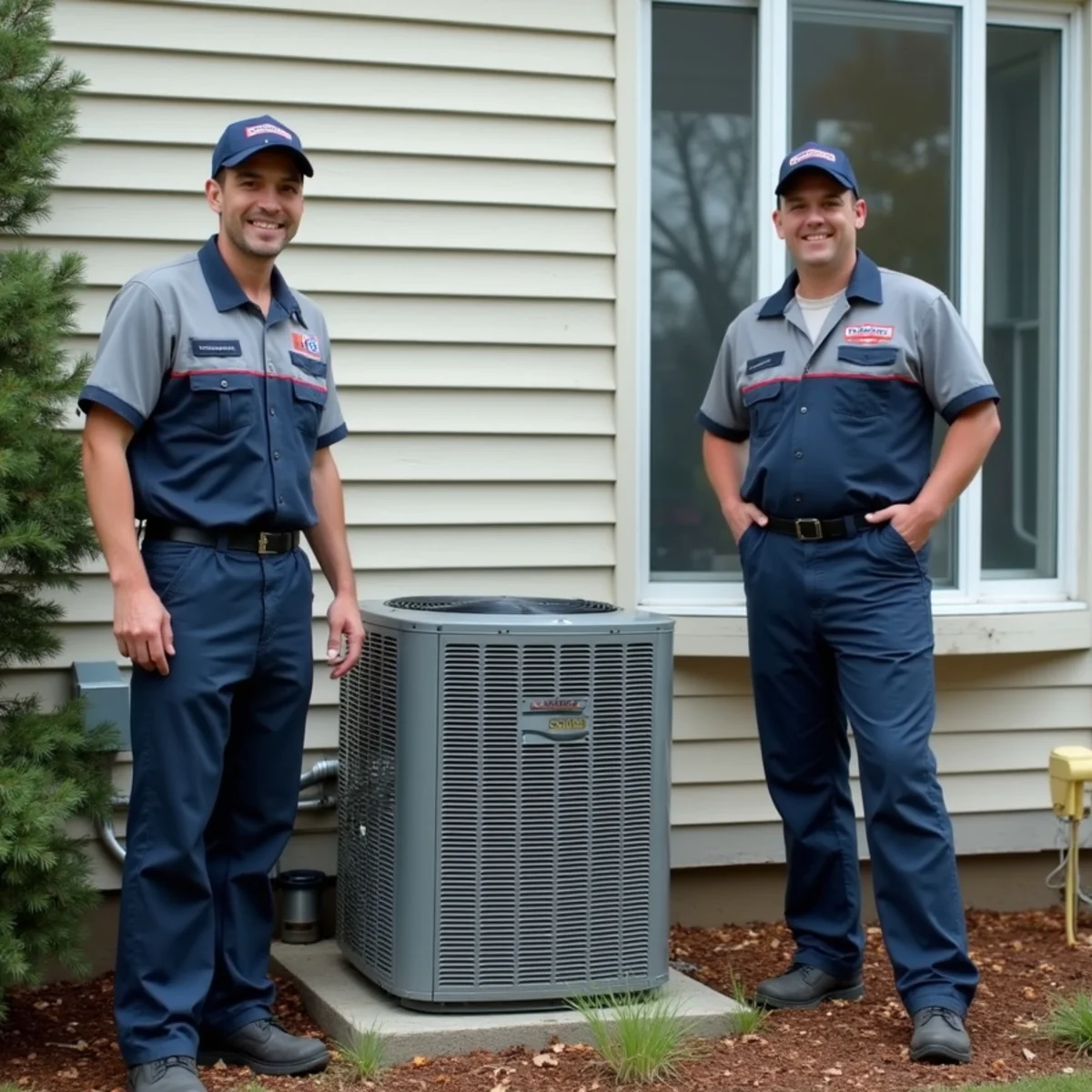
A cold-climate heat pump now goes toe-to-toe with a gas or oil furnace in the Hudson Valley — it heats and cools, runs cleaner, and earns rebates. But a furnace still has its place. Here's how to choose.
For most Newburgh homes, a cold-climate heat pump is now a real alternative to a gas or oil furnace: it both heats and cools, costs less to run than oil, and qualifies for NYSERDA rebates. A furnace still wins on the coldest nights and on upfront price. The right answer depends on your current fuel, your ductwork, and how cold your house actually gets in January.
We install both every week across the City and Town of Newburgh, so this isn't a sales pitch for one side. Here's the honest breakdown we give our own neighbors.
How each system actually heats your home
A furnace burns fuel — natural gas or oil — to create heat and blows it through ducts. It makes very hot air fast, which is why it feels great on a bitter morning. A heat pump doesn't burn anything; it moves heat from the outdoor air into your home using refrigerant, like an air conditioner running in reverse. In summer it flips and cools the house, so one system covers both seasons.
The old knock on heat pumps was that they quit in real cold. That's outdated. Today's cold-climate models hold useful heat output down to around 5°F and keep running well below zero — exactly what a Hudson Valley winter demands. Our heat pump installation and repair work is almost entirely these cold-climate units.
Side-by-side comparison for Hudson Valley homes
Heat pump vs. furnace — what matters for a Newburgh home
| Factor | Cold-Climate Heat Pump | Gas / Oil Furnace |
|---|---|---|
| Upfront cost | Higher before rebates; competitive after NYSERDA incentives | Lower, especially gas furnace swaps |
| Operating cost | Much cheaper than oil; competitive with gas | Gas is cheap to run; oil is expensive |
| Cooling included? | Yes — heats and cools in one system | No — you still need separate AC |
| Coldest-night output | Strong to ~5°F; may lean on backup below 0°F | Full blast in any cold |
| Rebates / tax credits | NYSERDA Clean Heat + federal credits available | Limited for high-efficiency models |
| Typical lifespan | 12–15 years | 15–20+ years |
The hybrid option most homeowners overlook
You don't always have to pick one. A dual-fuel setup pairs a heat pump with a gas or oil furnace: the heat pump handles most of the season efficiently, and the furnace kicks in automatically on the coldest nights. For many Newburgh homes converting from oil, this is the sweet spot.
Which one fits your situation?
A heat pump usually makes more sense if…
- You heat with oil now — switching to a heat pump can cut heating costs dramatically and you stop scheduling oil deliveries.
- You also want air conditioning, or your current AC is old — you replace two systems with one.
- You want to take advantage of NYSERDA Clean Heat rebates, which can take a serious bite out of the install price.
- Your home has no ductwork — a ductless mini-split heat pump heats and cools room by room without tearing into plaster.
A furnace usually makes more sense if…
- You already have natural gas and good ductwork — a high-efficiency gas furnace is cheap to install and run.
- You want the lowest possible upfront cost and already have separate AC that's working fine.
- Your home is drafty or poorly insulated and routinely sees sub-zero stretches where you want maximum heat output.
Whatever you lean toward, the install should start with an ACCA Manual J load calculation — not a guess from square footage. We size every furnace installation and heat pump to the actual home so you don't end up oversized, short-cycling, and uncomfortable.
Not sure which way to go?
We'll walk your home, run the numbers both ways including current rebates, and give you a written comparison — no pressure. Call HVAC Newburgh NY at +1 (327) 210-5999.
HVAC Newburgh NY · 48 Carter St, Newburgh, NY 12550
Frequently asked
Yes. Cold-climate heat pumps are rated to deliver heat down to around 5°F and keep working below zero. Sizing and, where needed, a backup heat source are what make them reliable through a Hudson Valley cold snap — which is why we always start with a load calculation.