
Your heat pump's air feels cooler than a furnace, the outdoor unit steams, and output dips on the coldest mornings. Here's which of those is completely normal — and which means it's time for service.
A homeowner new to a heat pump often calls us the first truly cold morning of the season, worried the system is failing. The air from the vents feels lukewarm compared to the old furnace, the outdoor unit is puffing steam, and on the coldest days the house seems to lag. Here's the reassuring part: most of that is exactly how a heat pump is supposed to behave in a Hudson Valley winter. The trick is knowing which symptoms are normal and which are genuinely a problem.
Why heat pump air feels cooler — and why that's fine
A gas furnace burns fuel and blows air heated to 120 or 130 degrees in short, hot bursts. A heat pump moves heat instead of burning it, delivering a larger volume of air at a gentler 90 to 100 degrees over longer, steadier cycles. Because that's below your body temperature of 98.6, air from a heat pump register can actually feel cool on your skin even while it's warming the room effectively. The house gets to temperature; it just does it with a warm, continuous flow rather than hot blasts. Long run times are a feature of heat pumps, not a fault.
The defrost cycle: steam, pauses, and cool air
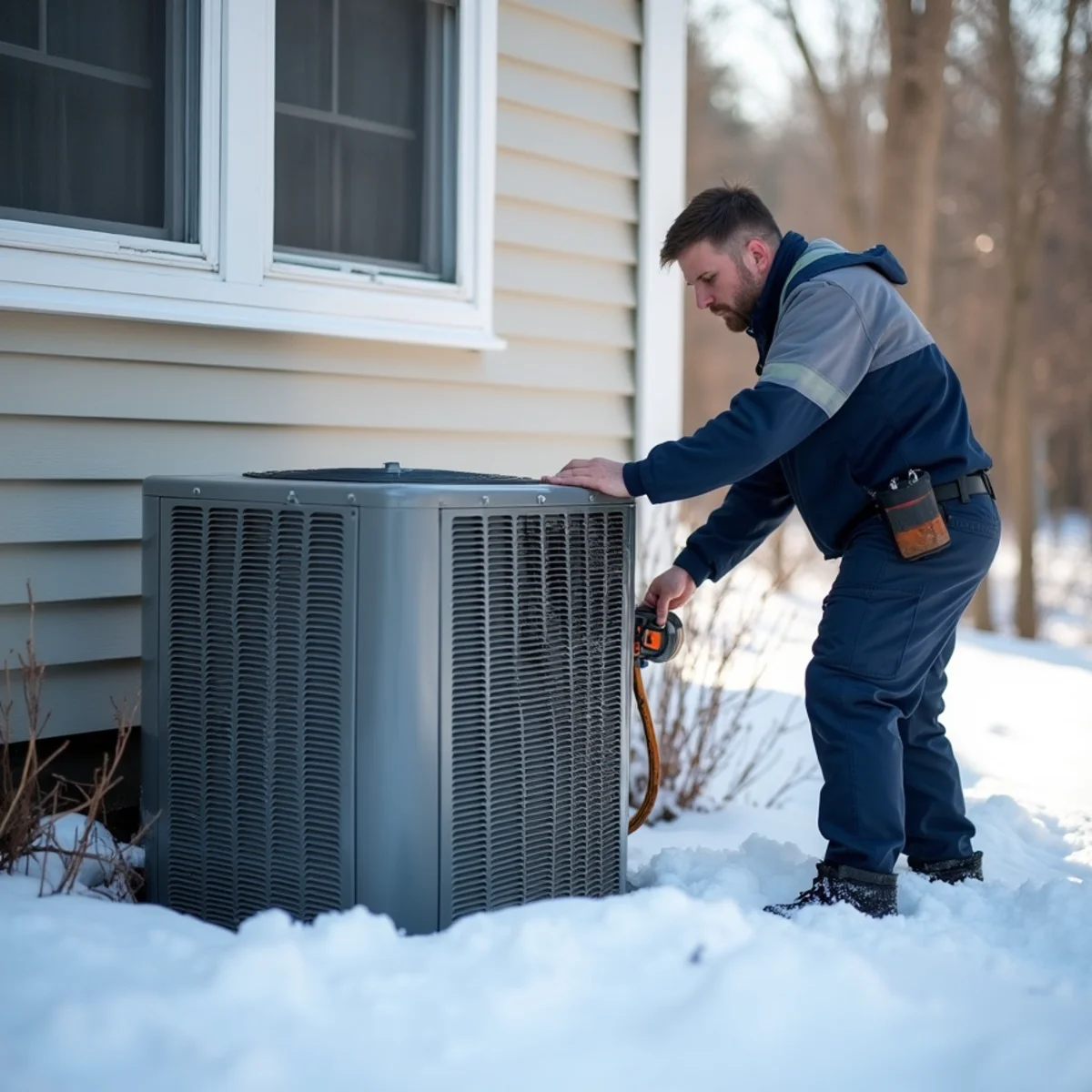
When it's cold and damp, frost forms on the outdoor coil. Your heat pump periodically reverses itself for a few minutes to melt that frost off — that's the defrost cycle. During it you'll see steam rising off the outdoor unit, hear a whoosh as it switches, and the indoor air may briefly feel cool. This is normal and automatic. It runs for several minutes, then the system returns to heating. Steam off the outdoor unit in cold weather is a sign it's working, not a sign it's broken.
Never scrape or pour hot water on a frosted unit
Let the defrost cycle do its job. Chipping ice off the coil with a tool can puncture it and cause a refrigerant leak, and dumping hot water can refreeze and make it worse. If the unit is completely encased in solid ice and not clearing on its own, that's a service call, not a DIY fix.
Where backup heat comes in
Most cold-climate heat pump installations here pair the heat pump with backup heat — electric resistance strips, or a furnace in a dual-fuel setup — that kicks in when temperatures drop into the teens and single digits or when the heat pump can't quite keep pace. On the coldest Newburgh mornings, that backup should engage automatically to hold your setpoint. If your thermostat has an "emergency heat" or "auxiliary heat" indicator, seeing it come on during a cold snap is the system doing its job. A modern cold-climate heat pump keeps producing usable heat well below freezing, but efficiency and output do taper as it gets colder, which is exactly what the backup is there to cover.
Now the symptoms that aren't normal
Set against all that, here's what actually signals a problem worth a service call:
- The outdoor unit stays fully iced over and never clears, even hours after a defrost should have run
- The house can't hold temperature at all and keeps falling behind, not just lagging briefly
- Your electric bill has spiked, a sign the backup strips are running constantly because the heat pump isn't contributing
- The air is genuinely cold, not just cooler than a furnace — pointing to low refrigerant or a stuck reversing valve
- The system runs but the outdoor fan or compressor isn't turning
- Short-cycling — starting and stopping every few minutes instead of running steadily
Low refrigerant is a common culprit behind genuinely weak heat, because a heat pump needs its full charge to move heat efficiently, and a leak leaves it gasping in cold weather when you need it most. A stuck reversing valve — the part that switches between heating and cooling — can leave you stuck in cool mode. Both need a technician with gauges.
When to call for heat pump service
If you're seeing the not-normal symptoms above — solid ice that won't clear, a house that keeps losing ground, or a bill that jumped — get it looked at before a cold snap turns it into a no-heat situation. Our heat pump service team checks refrigerant charge, defrost operation, backup-heat staging, and the reversing valve, and confirms the whole system is tuned for our winters rather than a milder climate.
We handle a lot of heat pump calls in New Windsor and across the Newburgh area, where these systems have grown popular thanks in part to New York heat pump rebates — but where a lot of owners are still learning what normal cold-weather operation looks like. Nine times out of ten, the reassurance that steam and lukewarm air are fine saves a service call. The tenth time, catching a low charge early saves a frozen morning.
Need a hand from a local tech?
Call for same-day service across Newburgh and the Hudson Valley, or request a free written estimate.
HVAC Newburgh NY · 48 Carter St, Newburgh, NY 12550
Heat pump in winter: what's normal and what isn't
| What you see | Normal or not | What it means |
|---|---|---|
| Air feels cooler than the old furnace | Normal | 90–100°F supply over longer cycles is by design |
| Steam rising off the outdoor unit in the cold | Normal | The defrost cycle melting frost off the coil |
| Brief cool air, then back to heating | Normal | The defrost cycle running for a few minutes |
| Aux or emergency heat on in the teens | Normal | Backup heat covering the coldest hours |
| Outdoor unit stays solid ice and never clears | Not normal | A defrost or refrigerant fault — call for service |
| House keeps losing ground, not just lagging | Not normal | Low charge, a stuck reversing valve, or undersizing |
| Electric bill spikes, backup runs constantly | Not normal | The heat pump isn't contributing — needs diagnosis |
Frequently asked
Somewhat, yes. Heat pump air runs cooler than furnace air — around 90 to 100 degrees — so it can feel cool on your skin while still warming the room. Brief cool air during a defrost cycle is normal too. Air that's genuinely cold, or a house that keeps losing temperature, is not normal and needs service.