If your air conditioner cools a little worse every summer and someone keeps "adding a pound of Freon," you do not have a maintenance problem — you have a leak. Refrigerant is not consumed like fuel; a sealed system should never run low. When it does, the charge is escaping somewhere, and repeatedly topping it off wastes money and can damage the compressor. Our EPA Section 608 certified technicians find the leak, repair it, and recharge the system to the manufacturer's specification. Call +1 (327) 210-5999 to stop paying for refrigerant that leaks right back out.
HVAC Newburgh NY — refrigerant leak repair in Newburgh, NY.
Signs you need refrigerant leak repair
Cooling gets weaker each season and never quite keeps up
Ice forming on the indoor coil or the copper refrigerant line
A hissing or bubbling sound near the indoor unit or line set
Higher electric bills with no change in how you run the AC
The system was "recharged" last year and is low again
Longer run times that never reach the set temperature
An oily residue on refrigerant lines, fittings, or the coil
Why a sealed system should never need "topping off"
Air conditioners and heat pumps circulate the same refrigerant in a closed loop for their entire lives. If the level drops, the refrigerant is physically escaping — through a corroded coil, a vibration crack in the line set, a loose flare fitting, or a bad valve. A technician who just adds refrigerant every spring is treating the symptom and ignoring the disease. That is bad for your wallet and, because refrigerant release is an environmental issue, it is also why EPA Section 608 rules exist. We fix the leak so the recharge lasts.
Do not let a low system keep running
Running an AC or heat pump that is low on refrigerant makes the compressor work harder and hotter, and it can freeze the coil solid. A frozen, low-charge system that keeps cycling is on a fast track to a burned-out compressor — the single most expensive failure the system can have. If cooling is weak and you see ice, shut it off and call us.
How we actually find the leak
Leak detection is detective work, and doing it right is what separates a lasting repair from a refill that fails by August. Our process is methodical.
1
Confirm the charge and symptoms
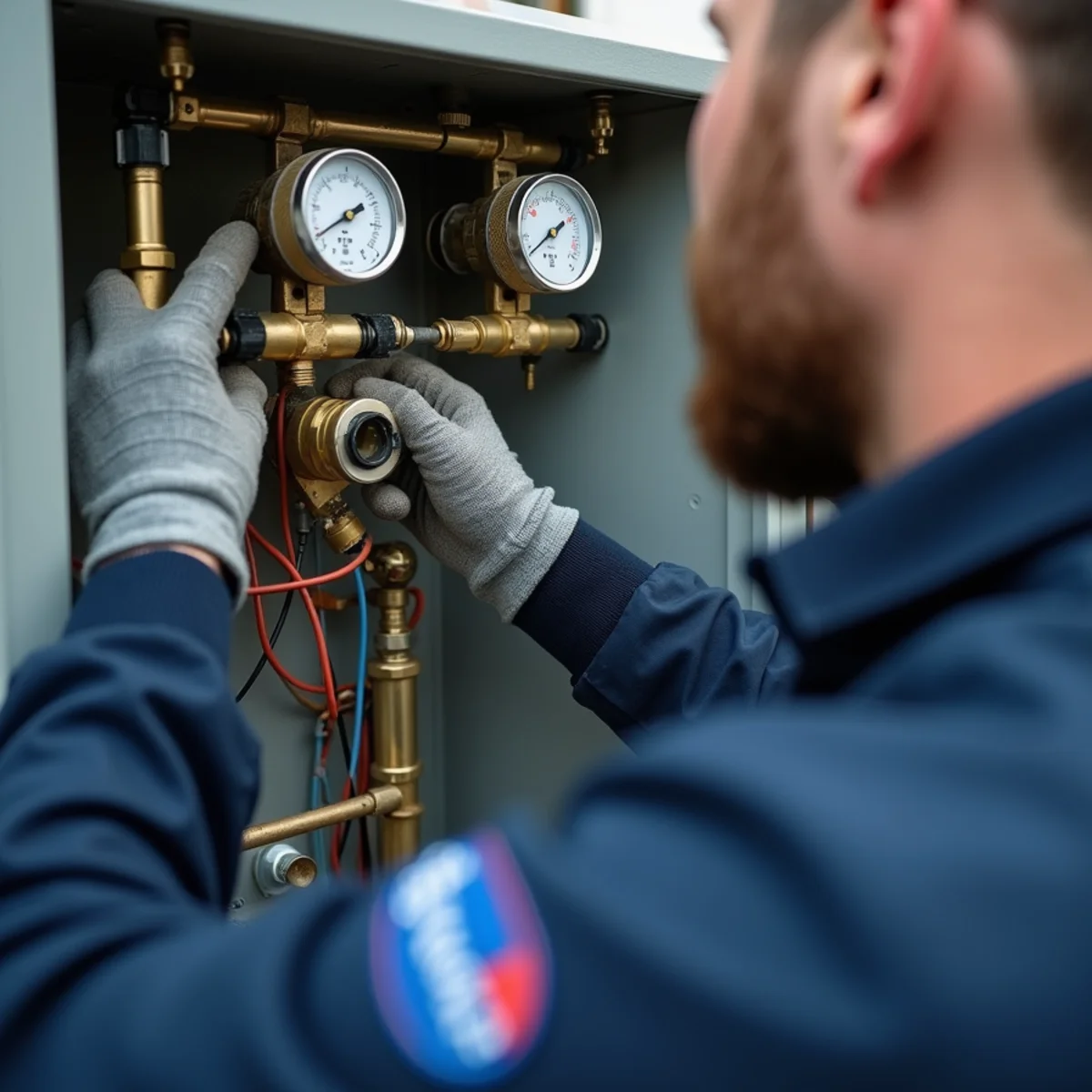
We measure system pressures and temperatures to confirm the system is actually low and not suffering an airflow or electrical problem instead.
2
Electronic and visual search
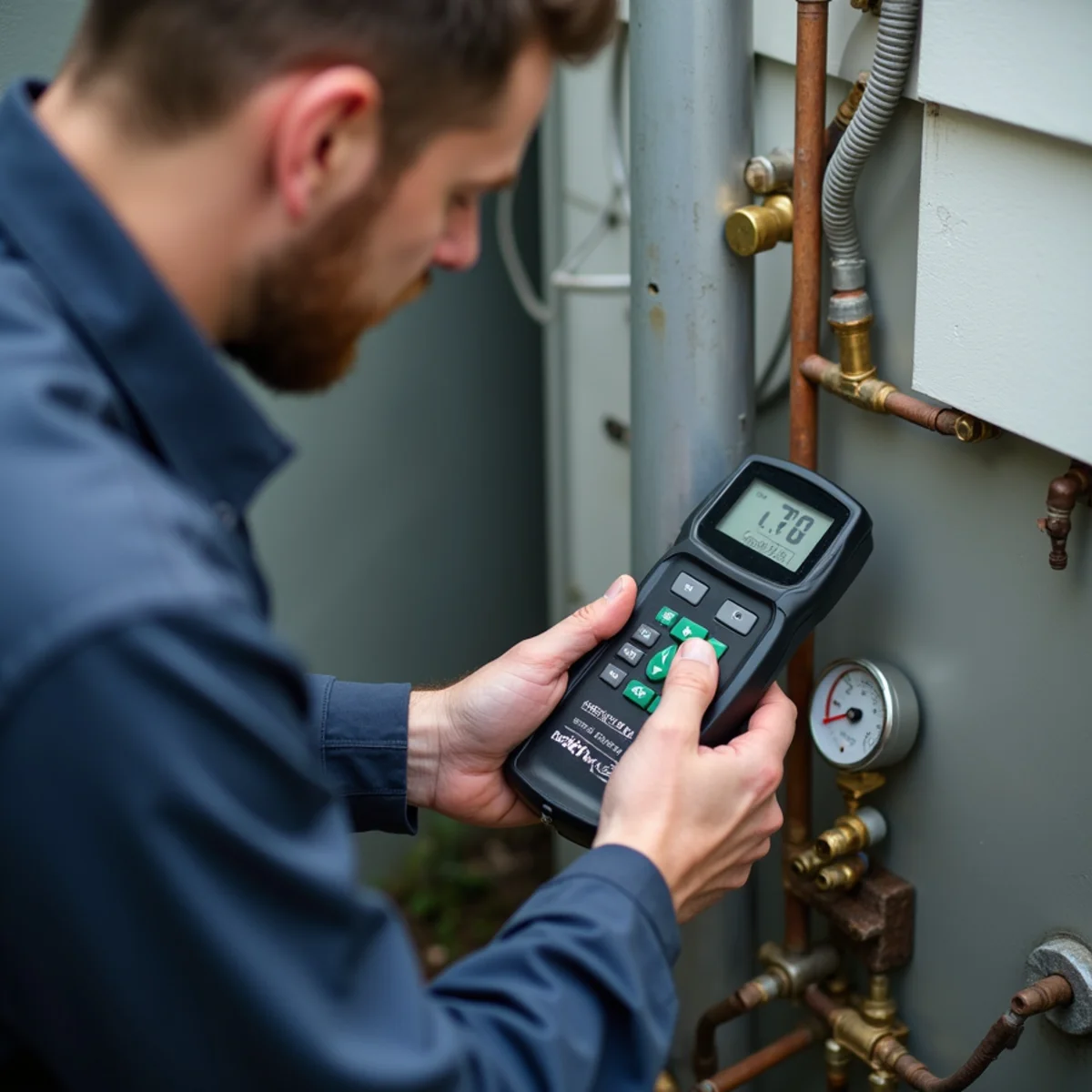
We sweep the coils, line set, and fittings with an electronic refrigerant detector and inspect for the tell-tale oily residue leaks leave behind.
3
Pressure test
For elusive leaks we isolate the system and pressurize it with dry nitrogen to pinpoint the exact location.
4
Dye when needed
For slow, intermittent leaks we can introduce UV dye and return to confirm the source under an ultraviolet light.
5
Repair, evacuate, recharge
We repair or replace the leaking component, pull a deep vacuum to remove moisture, and weigh in the exact factory charge.
Where leaks usually hide
Corroded evaporator coils, especially in older systems or humid basements
Vibration cracks and rub-throughs along the copper line set
Loose or aging flare and braze fittings at the connections
Failed Schrader (service) valve cores — a cheap but common culprit
Condenser coil damage from weed-trimmers, hail, or corrosion
Repair, or is it time to replace?
Some leaks are a quick, affordable fix — a valve core or a fitting. Others, like a corroded evaporator coil in a fifteen-year-old system that uses phased-out R-22 refrigerant, force a harder decision. R-22 has been discontinued and is expensive, so pouring it into an aging, leaky system rarely makes financial sense. We will show you the honest math: the cost to repair and recharge versus the cost of a modern, efficient replacement. If replacement is the smart move, we will size it properly rather than guessing. Homeowners across the Town of Newburgh and greater Orange County get the same straight answer.
One certification worth asking about
EPA Section 608 certification is required to handle refrigerant and it does not expire. It is fair to ask any contractor to confirm the technician working on your system holds it — ours do.
What a proper recharge actually involves
Recharging a system correctly is not "add a can until it feels cold." After we repair the leak, we recover any remaining refrigerant, pull a deep vacuum on the system to remove moisture and non-condensables that would otherwise sabotage performance, and then weigh in the exact factory charge for that model. Charging by weight — not by guesswork at the gauges — is the difference between a system that runs efficiently for years and one that is overcharged, starved, or slugging liquid back to the compressor. That precision is a big part of why a done-right leak repair outlasts a parking-lot refill.
Stop the seasonal recharge cycle
If you have been refilling the same system year after year, this is the season to end it. A proper leak repair pays for itself in refrigerant you stop buying, lower electric bills from a system that cools efficiently again, and a compressor that lives out its full life. Weak cooling in Newburgh's humid summers is miserable, and it is usually fixable at the source.
Tired of recharging every summer?
Call **+1 (327) 210-5999** for EPA-certified refrigerant leak detection and repair in Newburgh, NY. We fix the cause, not the symptom.
HVAC Newburgh NY · 48 Carter St, Newburgh, NY 12550
Refrigerant leak detection across Newburgh & Orange County
That system you keep recharging every summer is somewhere in the Town of Newburgh, New Windsor, Cornwall, or one of the many Orange County homes we visit for refrigerant leak repair each cooling season. Older split systems in Gardnertown ranches and humid basements corrode from the inside; line sets in finished attics crack from years of vibration; and across the bridge in Beacon the story is the same. Wherever your leak is hiding, we bring electronic detectors, nitrogen, and dye to find the actual source, repair it, and weigh in the exact factory charge — so you stop buying refrigerant that leaks right back out.
Ready for honest, upfront pricing? Call your Newburgh HVAC pros
Refrigerant Leak Repair in Newburgh and across Orange County — fast scheduling, EPA 608–certified techs, and a written quote before any work. No pressure, no surprises.
Precision refrigerant leak repair by HVAC Newburgh NY — done right the first time.
Why choose HVAC Newburgh NY
Find the source, not just the symptom
We locate the actual leak with electronic detectors, nitrogen pressure tests, and dye — then fix it, rather than masking it with a refill.
EPA Section 608 certified
Refrigerant handling is regulated. Our techs are certified to recover, repair, and charge legally and correctly.
Charged by weight, not by guess
We recover and weigh in the exact factory charge so the system runs efficiently, not overcharged or starved.
Protects the compressor
Catching a leak early prevents the low-charge running that burns out the most expensive part of your system.
What affects the price
We don’t post fake flat rates — every job is quoted in writing after we see it. Here’s what moves the number for refrigerant leak repair in Newburgh:
Location and accessibility of the leak (a fitting versus a buried coil)
Whether a coil, line set, or valve must be replaced or can be repaired
Type and amount of refrigerant — phased-out R-22 costs far more than current refrigerants
Time required for electronic, nitrogen, and dye leak-detection methods
System age and whether replacement is the more economical path
Whether the compressor was already damaged by low-charge operation
Access to the evaporator coil inside the air handler or furnace cabinet
Refrigerant Leak Repair FAQs
We can, but on a leaking system it is a temporary patch that leaks right back out and can harm the compressor. We recommend finding and repairing the leak so the recharge actually holds. We will always explain the trade-off before you decide.