
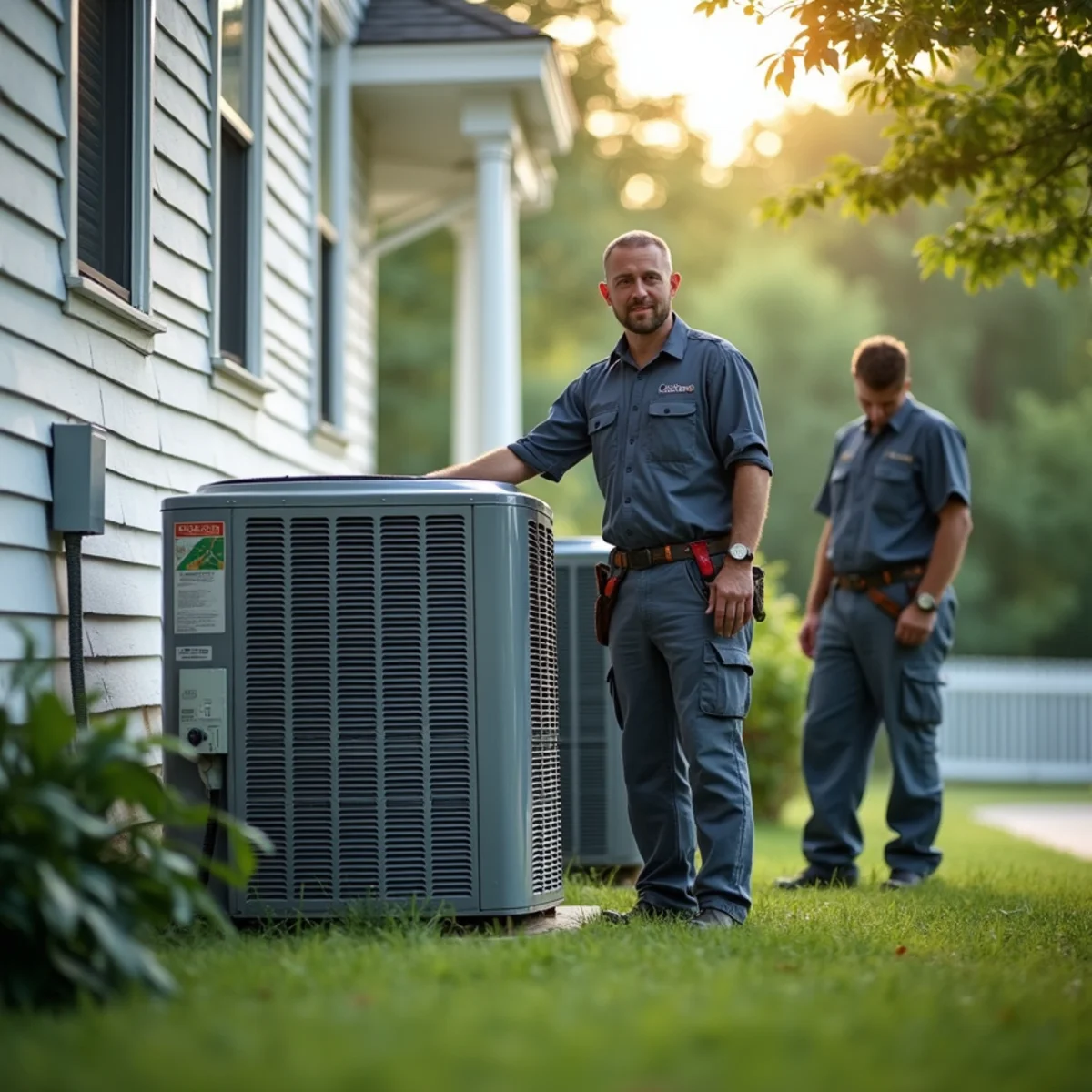
The thermostat says 74 but the house still feels like a swamp. In the Hudson Valley, comfort is about humidity as much as temperature — and a lot of AC systems here were never set up to remove it.
Your air conditioner is running, the thermostat reads a reasonable number, and yet the house feels clammy — floors a little tacky, air heavy, sheets damp at night. You're not imagining it, and the AC isn't necessarily broken. Newburgh sits in a humid-continental pocket of the Hudson Valley where summer humidity averages near 69 percent, and comfort here depends as much on pulling moisture out of the air as on dropping the temperature.
A properly working AC dehumidifies as a side effect of cooling. Warm, humid air passes over the cold evaporator coil, water condenses on the coil, and drains away. When a system can't keep up with our humidity, it's usually because something is interfering with that moisture-removal process — and several of the usual suspects are things you can check or prevent.
Temperature and humidity are two different jobs
Here's the counterintuitive part: an oversized air conditioner is worse at controlling humidity than a right-sized one. A unit that's too powerful cools the air fast, satisfies the thermostat, and shuts off before it has run long enough to wring much water out of the air. You get short, cold blasts and a house that stays damp. A correctly sized system runs longer, steadier cycles — and those longer cycles are what dry the air out. This is why we size cooling with a Manual J load calculation instead of guessing from square footage.
Common reasons your AC isn't beating the humidity
- A dirty air filter or coil, which cuts airflow and moisture removal alike
- Low refrigerant from a leak, leaving the coil too warm to condense much water
- An oversized system that short-cycles and never runs long enough to dehumidify
- A blower set too high, pushing air across the coil so fast that little moisture condenses
- A blocked or slow condensate drain letting collected water re-evaporate into the airstream
- Leaky return ductwork pulling humid air in from a crawlspace or attic
Start with the filter and the drain
Change the filter — a summer of pollen and dust chokes airflow fast in our area. Then find the condensate drain line and confirm water is actually draining outside or into the pan; a clogged line not only floods but leaves standing water that re-humidifies the air. These two checks are free and resolve a surprising number of "damp house" calls before we ever open the system up.
Set the fan to AUTO, not ON
If your thermostat fan is set to ON, the blower runs constantly — even between cooling cycles — and re-evaporates the water sitting on the coil right back into your house. Switch it to AUTO so the fan only runs while the system is actively cooling, and let the moisture drain away instead.
When it's a refrigerant or sizing problem
If the filter is clean, the drain is clear, and the house is still muggy, the trail usually leads to refrigerant or system design. A slow refrigerant leak leaves the coil too warm to dehumidify well and, if it's bad enough, you'll notice weak cooling and higher bills too. Warm air and poor moisture removal together are a classic low-charge signature — and topping off refrigerant without finding the leak just delays the next failure. Our team handles refrigerant leak repair by locating and sealing the leak, then recharging to the manufacturer's spec.
We field these calls all summer from homeowners in Balmville, where mature tree cover and proximity to the Hudson keep humidity stubbornly high and older homes often run AC systems that were sized in a hurry. When a house here can't shake the dampness no matter how low the thermostat goes, oversizing and refrigerant charge are the first two things we test. If the equipment is aging and mismatched to the home, sometimes right-sizing the next system does more for comfort than any repair to the current one.
A quick way to tell a humidity problem from a merely hot house: set an inexpensive hygrometer on a shelf. Indoor relative humidity should sit around 45 to 50 percent in summer for real comfort. If the thermostat is satisfied but the hygrometer reads 60 percent or higher, the system is losing the moisture battle even when the temperature looks fine — and that number tells us more about your comfort than the thermostat does. We check it on every muggy-house call before we touch a single component.
Options when the AC alone can't win
Some homes need help beyond the central system. A whole-house dehumidifier tied into the ductwork, a variable-speed blower that can run long low-and-slow cycles, or a properly sized ductless system for a stubborn addition can all pull the moisture down when a single-stage AC can't. If your cooling is struggling for other reasons too, our AC repair service diagnoses the whole picture — airflow, charge, sizing, and drainage — rather than treating humidity as an afterthought.
A dry 76 degrees feels far more comfortable than a clammy 72, and it costs less to run. If your Newburgh home never quite dries out in July, the fix is usually closer than a full replacement — but it starts with figuring out which link in the dehumidification chain has broken.
Need a hand from a local tech?
Call for same-day service across Newburgh and the Hudson Valley, or request a free written estimate.
HVAC Newburgh NY · 48 Carter St, Newburgh, NY 12550
Why a running AC leaves the house damp — and the fix
| Cause | Why the house stays damp | Fix |
|---|---|---|
| Dirty filter or coil | Low airflow cuts moisture removal along with cooling | Change the filter; have the coil cleaned |
| Oversized AC | Short cycles never run long enough to wring out water | Right-size the system with a Manual J calculation |
| Low refrigerant | The coil runs too warm to condense much water | Find and seal the leak, then recharge to spec |
| Fan set to ON | The blower re-evaporates coil water back into the house | Switch the thermostat fan to AUTO |
| Clogged condensate drain | Standing water re-humidifies the airstream | Clear the drain line |
| Leaky return ductwork | Pulls humid attic or crawlspace air into the system | Seal the return ducts |
| Right-sized AC but still 60%+ indoor humidity | Not enough dedicated dehumidification | Add a whole-house dehumidifier or a variable-speed system |
Frequently asked
Because cooling and dehumidifying are different jobs. If the system short-cycles, has low refrigerant, a dirty coil, or the fan set to ON, it lowers temperature without removing enough moisture. Longer, steadier cycles from a right-sized, well-charged system are what actually dry the air.