
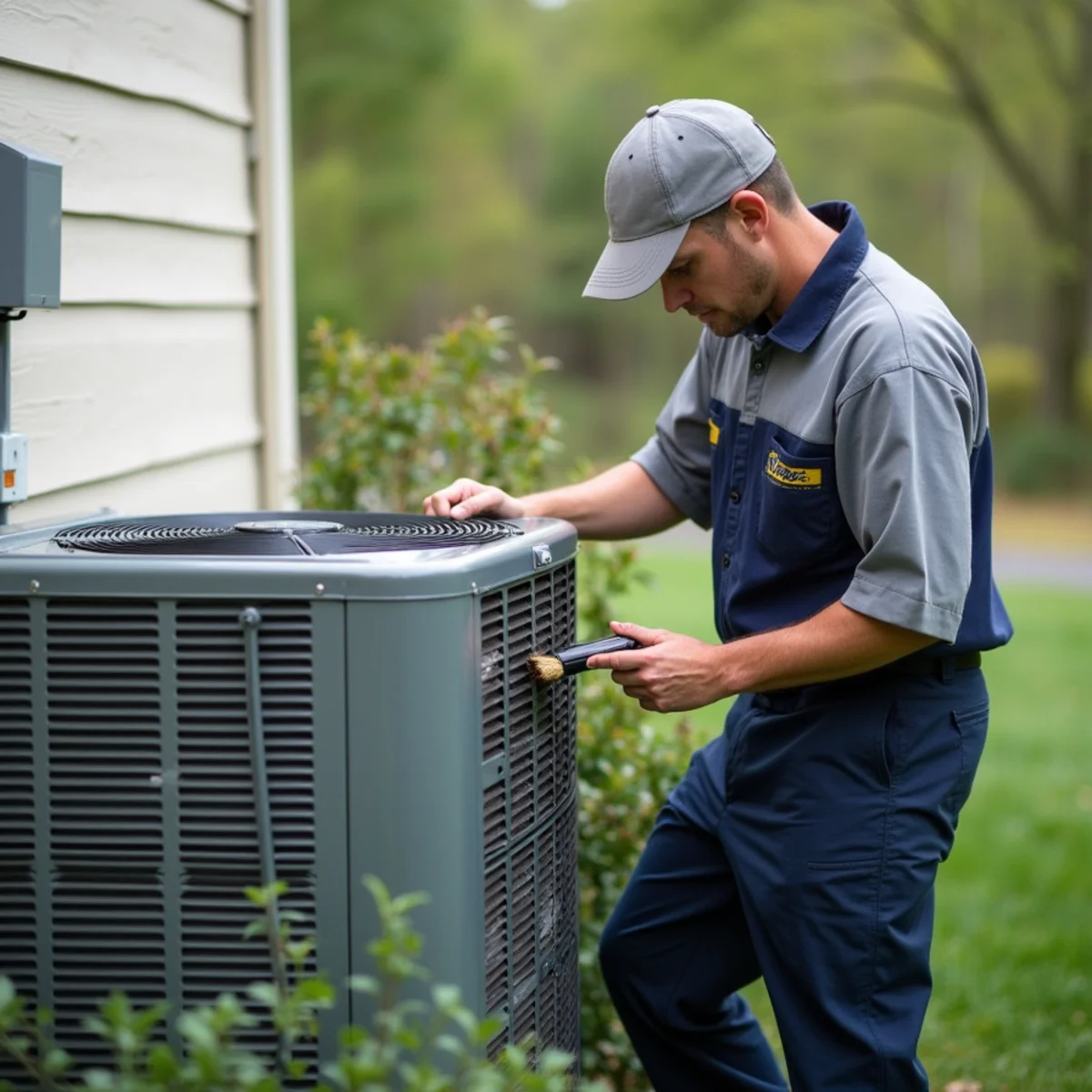
Newburgh summers are not just hot, they are humid, around 69% on average. A proper spring start-up is what lets your AC pull that moisture instead of just blowing cold, clammy air.
Air conditioning in the Hudson Valley has two jobs, and most people only think about one. Cooling the air is the easy part. Pulling out the humidity that makes a 84-degree day feel like a swamp is the harder job, and a system that limped through last summer will not do it well. A spring start-up done in April or early May, before you actually need the AC, is how you find the weak spots while it is still a scheduled fix and not a July breakdown.
Outside: give the condenser some attention
The outdoor unit sat through a Newburgh winter of snow, salt, and falling debris. Before the first run, walk out and check it.
- Clear leaves, grass clippings, and debris from around and inside the unit, keeping two feet of open space on all sides.
- Gently hose the outer fins from the inside out to rinse away dirt that insulates the coil and kills efficiency.
- Straighten any fins that got bent over winter, and confirm the unit sits level on its pad.
- Look for chewed wiring or a nest; small animals love a sheltered condenser over winter.
Kill the power before you touch the coil
Shut off the disconnect at the outdoor unit and the breaker before you clean fins or reach inside. There are capacitors in there that hold a charge even with the power off. If you are not comfortable, leave the deep cleaning to a technician.
Inside: filters, drains, and a test run
- 1
Install a fresh filter
A dirty filter chokes airflow, drops efficiency, and can freeze the indoor coil. Start the season clean and note the size.
- 2
Check the condensate drain
Your AC pulls gallons of water out of humid Hudson Valley air. Confirm the drain line is clear and the pan is not holding water, since a clogged drain causes leaks and shutdowns.
- 3
Test before you need it
Set the thermostat to cool a few degrees below room temperature. Within a few minutes you should feel a real temperature drop at the supply registers and the outdoor unit should be running.
- 4
Feel and listen
Weak airflow, warm air, grinding, or a musty smell all point to problems worth diagnosing now rather than during a heat wave.
The humidity test most people skip
Here is the check that matters most around here. Run the AC on a warm, muggy afternoon and see whether the house actually feels drier, not just cooler. If it cools fast but stays clammy, the unit may be oversized, low on refrigerant, or short-cycling before it can wring out moisture. That clammy feeling is also a mold risk. Diagnosing it is exactly the kind of thing our AC repair team sorts out, and the fix is often sizing or airflow rather than a whole new system.
When to bring in a pro
Refrigerant work, electrical repairs, and coil cleaning need a licensed technician with EPA Section 608 certification. If your test run turned up weak cooling, ice on the lines, a tripping breaker, or that stubborn humidity, book a professional AC start-up. Homeowners around Fostertown who schedule in spring skip the multi-week waits that pile up once the first heat wave hits. And if you have decided this is the summer to add cooling to a no-duct room, our ductless mini-split options are the go-to retrofit for Newburgh's older homes.
The dehumidifier question
On the muggiest Hudson Valley stretches, even a healthy AC can struggle to hold indoor humidity in the comfortable 40 to 50 percent range, especially in a damp basement or a shaded first floor. If your house feels sticky no matter the thermostat setting, a whole-home dehumidifier tied into the system, or a standalone unit for a problem basement, takes the load off the AC and stops the clammy, mold-friendly conditions that thrive around here. It also lets you set the thermostat a touch higher and stay comfortable, which trims your cooling bill through the summer.
One more reason to test early: refrigerant problems hide until the system works hard. An AC that seemed fine in mild May can fall behind on the first 90-degree day because it has been slowly losing charge all along, and a low charge makes the coil ice up and the compressor overheat. Catching a slow leak in spring means a repair on your schedule instead of a dead system during a heat advisory. That is the whole point of starting the season with a real test rather than a hopeful first run.
Small habits that stretch the season
- Close blinds on south- and west-facing windows during peak afternoon sun to cut the cooling load.
- Run bathroom and kitchen exhaust fans to push humidity out rather than letting the AC fight it.
- Use ceiling fans to feel cooler at a higher thermostat setting; fans cool people, not empty rooms.
- Keep the outdoor unit shaded if you can, but never wrap it or block its airflow.
Set the fan to auto for dehumidification
Running the blower on "auto" rather than "on" lets moisture drain off the coil between cycles instead of blowing back into the house. It is a free setting change that noticeably improves how dry your home feels on humid days.
Beat the heat before it arrives
Schedule a spring AC start-up now and skip the heat-wave wait. Call HVAC Newburgh NY at +1 (327) 210-5999 for service across Fostertown and greater Newburgh.
HVAC Newburgh NY · 48 Carter St, Newburgh, NY 12550
Spring AC start-up: outdoor and indoor tasks
| Where | Task | DIY or pro |
|---|---|---|
| Outdoor | Clear debris, rinse fins inside-out, keep 2 ft clearance | DIY (power off) |
| Outdoor | Refrigerant charge and deep coil cleaning | Pro (EPA 608) |
| Indoor | Fresh filter and clear the condensate drain | DIY |
| Indoor | Test run and confirm a real temperature drop at the registers | DIY |
| Whole home | Diagnose weak cooling, icing, or lingering humidity | Pro |
Frequently asked
Run the start-up in April or early May, before you actually need cooling. Testing early means any weak spot becomes a scheduled repair instead of a breakdown during the first July heat wave, when wait times are longest.