
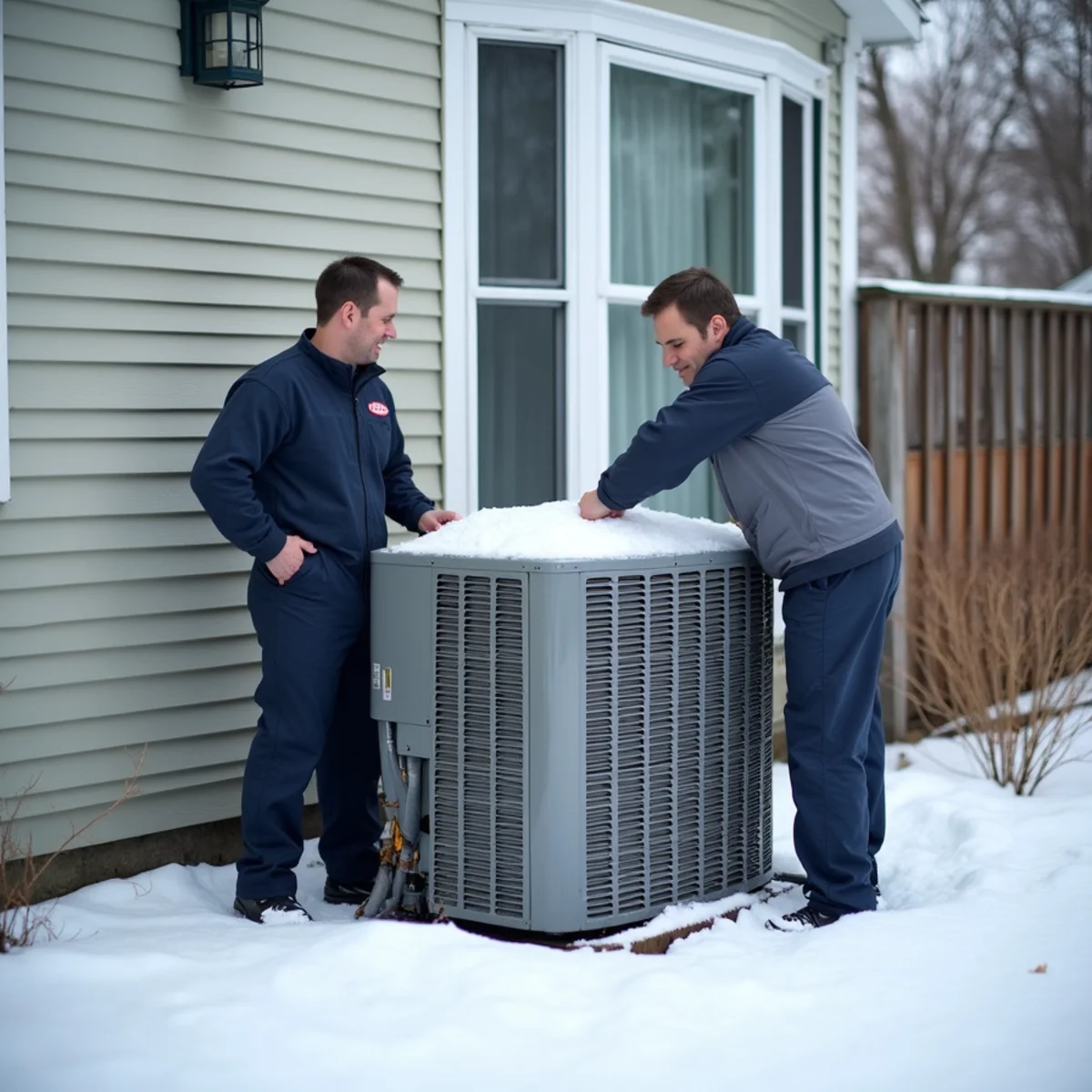
A Hudson Valley winter throws ice, heavy snow, and falling branches at your outdoor unit. Here is how to protect it, and the well-meaning cover mistake that does more harm than good.
The outdoor unit is the most exposed part of your system, and winter around Orange Lake is hard on it. Ice storms glaze it over, nor'easters bury it, and the mature trees that make these neighborhoods beautiful drop limbs on it. A little protection in November keeps that unit healthy for spring, but the most common thing homeowners do to protect it is actually the thing that hurts it most.
The full-cover mistake
Every fall I see condensers wrapped head to toe in a fitted vinyl cover or a tarp cinched down tight. The intention is good. The result is a sealed, humid box where moisture condenses and cannot escape. That trapped dampness rusts the coil and electrical components, and the dark, enclosed space becomes a five-star hotel for mice looking to nest in the wiring over winter. When they chew the low-voltage lines, you find out in spring when the AC will not start.
Never fully wrap a heat pump
If your outdoor unit is a heat pump, it runs all winter to heat your home. Covering it at all will block airflow and can cause it to overheat or fail. Heat pumps are built to sit out in the weather. Leave it uncovered, keep snow cleared from around it, and never let anything restrict the airflow.
What actually protects the unit
For an air conditioner that sits idle all winter, the goal is to shield the top from falling debris while leaving the sides open to breathe.
- Cover only the top. A piece of plywood weighted with a brick, or a cover made for just the top surface, keeps out falling debris and icicles while the sides stay ventilated.
- Trim overhanging branches before winter so ice-loaded limbs cannot snap onto the unit.
- Clear leaves and debris from around and inside the cabinet in late fall so nothing rots against the coil.
- Keep two feet of clearance so you can shovel around it after storms.
Managing snow and ice through the season
- 1
Clear snow gently after storms
Brush accumulated snow off the top and away from the sides after each significant storm. Do not chip at ice with anything sharp, since a punctured coil is an expensive repair.
- 2
Watch the roofline above the unit
If the condenser sits under a roof edge, ice and snow sliding off can crush it. A simple diverter or moving where snow is thrown can save the cabinet.
- 3
Keep it out of the plow path
Make sure driveway plowing and shoveling does not pile heavy, salty snow onto the unit, which corrodes the fins.
Give it a look in spring
Come spring, remove any top cover, clear out debris, and check for chewed wiring or bent fins before the first run. Pairing that with a proper start-up is the cleanest way to catch winter damage early. If your unit took a hit from ice or a fallen limb, or it will not start after the thaw, our AC repair team handles storm damage and refrigerant work across the Orange Lake area and the rest of the Town of Newburgh. A quick heating maintenance visit in fall can also flag an aging unit before winter finishes it off.
Do not overlook the line set and pad
The unit itself is not the only outdoor part that suffers over winter. The insulated refrigerant line, the line set, runs from the outdoor unit into the house, and its foam insulation cracks and crumbles with age and sun. Damaged insulation costs you efficiency and invites condensation problems, so check it each spring and have it replaced if it is falling apart. Also look at the pad the unit sits on. Frost heave in Hudson Valley winters can tip a pad over time, and a unit that sits badly out of level strains the compressor and drains poorly. A quick re-level in spring is cheap insurance.
It also pays to know where the outdoor disconnect is and to keep it accessible all winter. If a limb comes down on the unit or you smell burning after a storm, you want to cut power fast without digging through a snowbank to reach a buried box. Mark it if you have to. Ten seconds of access can be the difference between a scare and a fire.
A short winter routine that works
- Late fall: clear debris, trim overhanging branches, cover only the top, and confirm two feet of clearance.
- After each storm: brush snow off the top and away from the sides.
- Midwinter: watch for roof ice building up above the unit and safely knock down hazards.
- Spring: remove the top cover, check for chewed wiring and bent fins, then book a start-up.
Mind the drainage under the unit
Keep the ground under the condenser draining freely. If meltwater pools and refreezes, it can lift the pad and lock the base of the unit in ice. A little gravel and good grading keeps water moving away from the cabinet all winter.
Storm damage or a unit that won't start?
We handle winter damage and spring start-ups across Orange Lake and the Town of Newburgh. Call HVAC Newburgh NY at +1 (327) 210-5999.
HVAC Newburgh NY · 48 Carter St, Newburgh, NY 12550
Winter care: idle central AC vs a running heat pump
| Winter task | Central AC (idle) | Heat pump (runs all winter) |
|---|---|---|
| Covering | Cover the top only to block debris | Never cover — it blocks airflow |
| Snow and ice | Brush heavy snow off the top after storms | Keep cleared, never restrict airflow |
| During winter | Sits off all season | Heats the home; watch that the defrost cycle clears ice |
| Spring | Remove top cover, check wiring, book a start-up | Ongoing — schedule a maintenance check |
Frequently asked
Cover only the top to block falling debris and icicles, and leave the sides open. A full wrap traps moisture that rusts the unit and creates a cozy nest for mice that chew the wiring. Never cover a heat pump at all, since it runs all winter.