
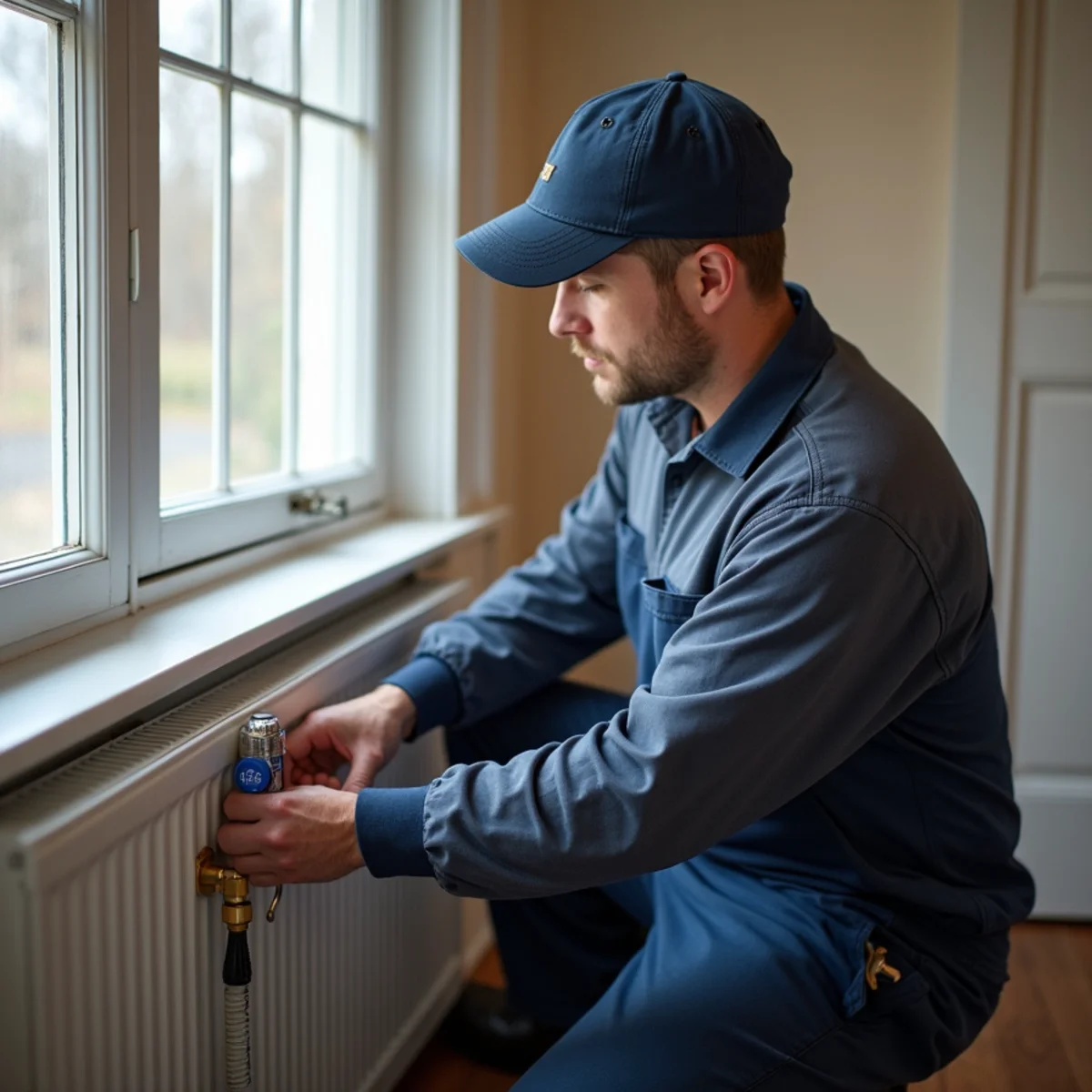
December in the Hudson Valley does not ease in. These nine steps get a Newburgh heating system, and the house around it, ready before the cold locks in for months.
Winterizing is not one big project. It is a handful of small jobs that, done together in November, keep your heating bills sane and your system reliable through a Hudson Valley winter that can run from December well into March. I walk clients in Washington Heights through this list every fall, and the ones who follow it call me far less often when the thermometer drops into the teens.
Get the heating equipment ready
- 1
Bleed your hot-water radiators
Air trapped at the top of a radiator blocks hot water and leaves cold spots. With the system warm, open each bleed valve until water hisses out steadily, then close it. Start with the highest and farthest radiators.
- 2
Check boiler pressure
A cold hot-water boiler should read around 12 to 15 psi on the gauge. Too low and upstairs radiators go cold; too high and the relief valve dumps water. If it will not hold, have it looked at.
- 3
Swap the furnace filter and stock spares
Start winter with a clean filter and keep three or four on hand. You will not want to run to the store during a January cold snap.
- 4
Test the full heat cycle
Run the system through a complete cycle and confirm every room responds. Note any radiator or register that stays cold so you can address it before the deep cold.
Keep the emergency oil or gas topped up
If you heat with oil, do not let the tank ride near empty into December. Running a tank dry pulls sludge into the lines and often means a no-heat call plus a bleed and restart. Fill before the first cold week, not after.
Seal the house so the heat stays in
A perfect furnace cannot keep up with a leaky house. The next steps cut the load your system has to fight.
- 1
Weatherstrip doors and windows
Feel for drafts on a windy day and seal the gaps. Older Newburgh homes leak the most around original windows and exterior doors.
- 2
Insulate exposed pipes in cold zones
Pipe runs in unheated basements, crawlspaces, and exterior walls are freeze risks. Foam sleeves are cheap insurance against a burst pipe.
- 3
Reverse your ceiling fans
Set fans to spin clockwise on low. That pushes warm air trapped at the ceiling back down into the room and evens out the temperature.
Prepare for the storms that will come
Nor'easters and ice storms knock out power in this valley most winters. Two final steps get you ready.
- 1
Plan your backup heat
Know how you will stay warm during a multi-day outage, whether that is a generator sized for the boiler, a properly vented space heater, or a warm room you can seal off. Never run a generator or grill indoors.
- 2
Book a professional check if it has been a while
If your system has not had a professional look in over a year, a fall visit closes the loop on everything you cannot see or reach.
When to call instead of DIY
If bleeding radiators does not fix cold rooms, if the boiler keeps losing pressure, or if the furnace short-cycles, those are signs of a deeper issue that winterizing will not solve. That is the point to bring in our heating maintenance team while it is still a scheduled visit and not a 2 a.m. emergency. And if the heat has already quit, our emergency HVAC crew averages a 60 to 90 minute response across the City and Town of Newburgh.
The cost of skipping it
Every step here is cheap or free, and the failure it prevents is neither. A burst pipe from an unheated basement corner can mean thousands in water damage and a ruined week over the holidays. A dry oil tank means a no-heat call plus a restart fee on the coldest night of the year. A boiler that loses pressure all winter because nobody bled the radiators quietly wastes fuel in every room that never gets warm. An hour of winterizing in November is one of the best trades in home ownership around here.
Do not forget the thermostat
A programmable or smart thermostat earns its keep in a Newburgh winter. Setting it back a few degrees while you sleep or while the house is empty trims fuel use without ever letting the place get cold enough to risk pipes. Just do not set it back so far that the system struggles to recover on the coldest mornings, and never drop it below the mid-50s if you leave for a winter trip, or you invite frozen pipes in the walls. If your thermostat is still an old mercury dial, upgrading it is one of the cheapest efficiency improvements you can make.
A quick pre-winter walkthrough
- Locate your main water shutoff now, before an emergency, so you can stop a flood fast if a pipe bursts.
- Change the batteries in thermostats, smoke alarms, and CO detectors at the same time each fall.
- Keep a flashlight and your heating company's number somewhere you can find them in the dark.
- Confirm the emergency shutoff switch for the furnace or boiler is labeled and easy to reach.
Get winter-ready with one call
From a full winterizing service to an emergency at midnight, we cover Washington Heights and the rest of Newburgh. Call HVAC Newburgh NY at +1 (327) 210-5999.
HVAC Newburgh NY · 48 Carter St, Newburgh, NY 12550
November winterizing checklist at a glance
| Step | Why it matters | DIY or pro |
|---|---|---|
| Bleed hot-water radiators | Clears trapped air that leaves rooms cold | DIY |
| Check boiler pressure (about 12–15 psi cold) | Low pressure starves upstairs radiators | DIY |
| Insulate exposed pipes in cold zones | Prevents a burst pipe and water damage | DIY |
| Weatherstrip doors and windows | Cuts the load your heat has to fight | DIY |
| Professional system check if overdue | Closes the loop on what you cannot reach | Pro |
Frequently asked
Do it in November, before the first sustained cold snap. December in the Hudson Valley arrives fast, and finishing these steps early means your system is proven and ready rather than tested for the first time at 15 degrees.