
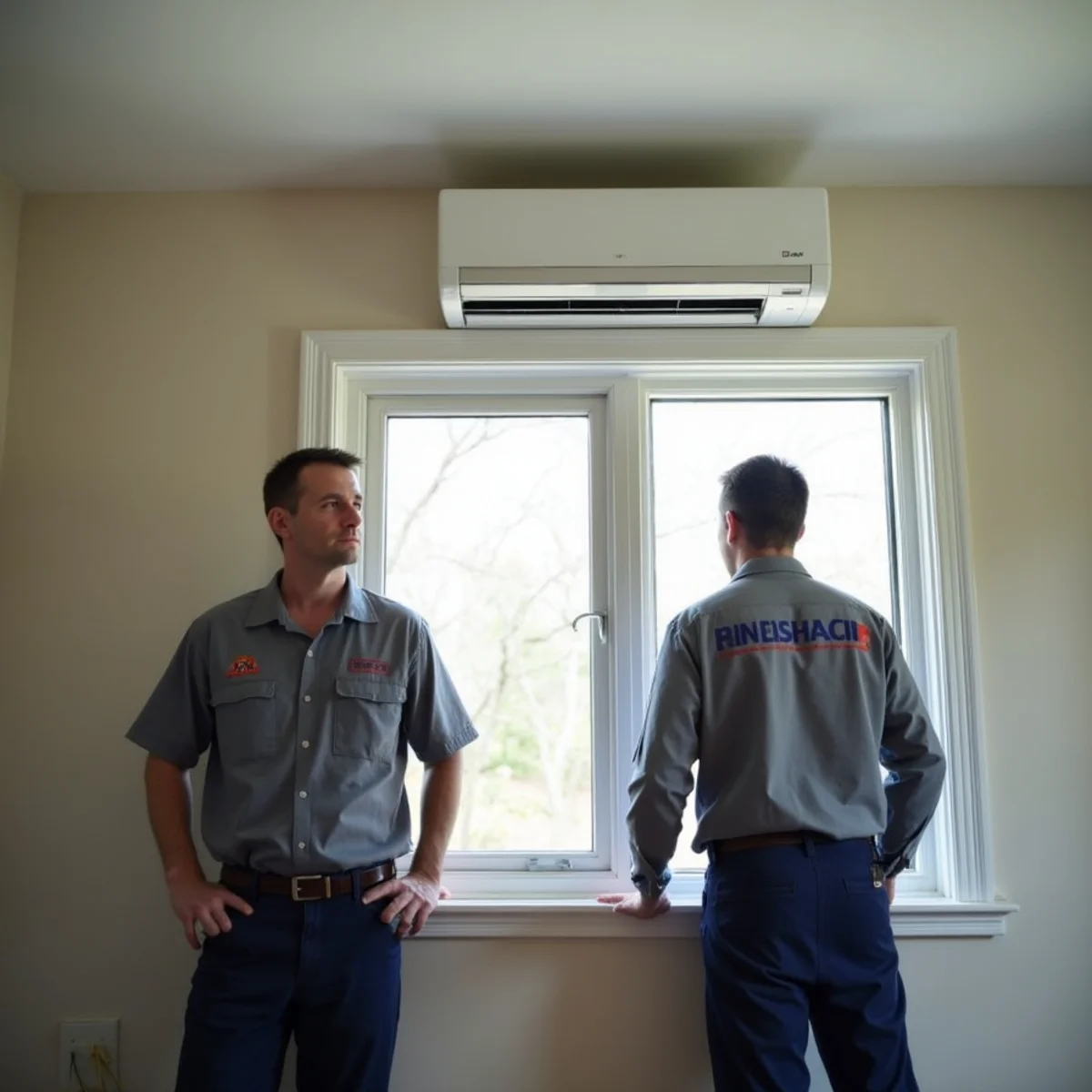
If your Newburgh home has radiators and no ductwork, you don't have an HVAC problem — you have the ideal candidate for a ductless system. Here's why the two go together so well.
A lot of Newburgh homeowners think they're stuck. The house has radiators, the winters are handled by an old boiler, and there's no ductwork anywhere — so adding air conditioning seems to mean either noisy window units every summer or a brutal, expensive project to shoehorn ducts into a house that has no room for them. Here's the reframe: a boiler-heated home with no ducts isn't a hard case for cooling. It's the perfect case for a ductless mini-split.
Newburgh's housing was built without ducts on purpose
Much of Newburgh's housing stock predates central forced-air heating. These homes were built for radiators — steam or hot-water — fed by a boiler in the basement. Radiators heat beautifully and quietly, and generations of Hudson Valley families have stayed warm with them. But radiators only do one thing: heat. They can't cool, and they can't dehumidify, which leaves owners scrambling every summer as our humid, sticky weather sets in. The heating half of the equation was solved a century ago; the cooling half never was.
Retrofitting ducts into these homes is genuinely difficult and often destructive — as anyone who owns one of the pre-1900 homes in the historic districts can tell you. That's exactly the gap ductless was designed to fill.
Why ductless and boiler homes are a natural match
A ductless mini-split system puts a compact outdoor unit outside and connects it to indoor heads through a thin refrigerant line-set — no ducts required. Each head cools (and heats) its own zone, controlled independently. For a home that already has working radiators, that means you can add whole-house cooling without touching your heating system at all. The boiler keeps doing winter; the mini-splits handle summer. Two systems, each excellent at its job.
- Adds cooling and dehumidification to a radiator home without ductwork or demolition
- Keeps your existing boiler and radiators fully intact for winter heat
- Zone-by-zone control, so you cool bedrooms at night and living spaces by day without wasting energy
- Far quieter and more efficient than a houseful of window units
- Frees up windows and eliminates the seasonal ritual of hauling AC units in and out
The bigger opportunity: heating too
Here's what many owners don't realize until we explain it: a modern mini-split is a heat pump, so it heats as well as it cools. If your boiler is aging, oil-fired, or expensive to run, mini-splits can carry a growing share of your heating load — even in cold weather with today's cold-climate units — and let you lean on the old boiler less. Some homeowners keep the boiler as backup for the deepest cold and let the heat pumps do the everyday work, cutting fuel bills significantly. It's a path that often pairs with New York's heat pump rebates, though you'll want to verify current eligibility since the programs change.
You don't have to convert everything at once
Mini-splits scale. Start with a single head in the room you struggle with most — a sun-baked bedroom or a stifling top floor — and add zones over time. Many Newburgh families begin with cooling for two or three rooms and expand as budget allows. A phased plan spreads the cost without wasting the initial work.
Getting the design right
A good ductless installation isn't about slapping heads on walls — it's about matching the system to how your house actually gains and loses heat. That means a room-by-room Manual J load calculation, smart placement of indoor heads for even comfort, and locating the outdoor unit where it runs efficiently and stays out of the way. Done right, a mini-split disappears into the background and just works. Done carelessly, it short-cycles, drips, or leaves hot spots.
The outdoor unit's location deserves thought up front. One condenser can feed several indoor heads, but it needs clear airflow and a spot where its winter operation — a heat pump works hardest in the cold — won't be buried by snow or drip onto a walkway that then ices over. In tight-lot neighborhoods, planning that placement early avoids awkward compromises later.
The running-cost payoff
Ductless systems earn their keep on the bills, too. Because there are no ducts, you avoid the energy that leaks out of duct runs — often a fifth or more of what a forced-air system moves never reaches the rooms. And because each zone runs only when a room actually needs it, you stop paying to condition space nobody's using. For a boiler-heated home that's never had efficient cooling, the first summer's electric bill is usually a pleasant surprise rather than the shock people brace for.
We install ductless systems throughout the Newburgh area, including the compact, boiler-heated homes of Colonial Terrace, where lot lines are close and clean placement matters. Owners there consistently tell us the same thing after the first summer: they can't believe they lived with window units for so long. If your home has radiators and no ducts, you're not stuck — you're the ideal candidate.
Need a hand from a local tech?
Call for same-day service across Newburgh and the Hudson Valley, or request a free written estimate.
HVAC Newburgh NY · 48 Carter St, Newburgh, NY 12550
Cooling a radiator home: your options compared
| Option | Fit for a boiler-heated, no-duct home | Trade-off |
|---|---|---|
| Window AC units | Cheap to buy | Noisy, block windows, hauled in and out each season, inefficient |
| Retrofit central ducts | Whole-house cooling from one system | Destructive and costly to shoehorn ducts into an old house |
| Ductless mini-splits | Built for exactly this setup | Higher upfront than window units, but quiet, zoned, and efficient |
| Keep the boiler, add mini-splits | Boiler handles winter, mini-splits handle summer | Two systems to maintain, but each does what it does best |
Frequently asked
Yes — that's exactly what ductless mini-splits are for. They cool and dehumidify through slim refrigerant lines instead of ductwork, so you get whole-house air conditioning without touching your radiators or boiler. It's the standard solution for Newburgh's older boiler-heated homes.