
Orange County sits in orchard and grassland country, and the pollen that coats your car in April rides right into the house. Here is how to actually lower the load inside.
Every spring I get the same call from folks around Gardnertown and out toward the Marlboro orchards: windows are shut, the car is dusted yellow every morning, yet they are still sneezing at the kitchen table. Pollen does not stop at the door. It hitches a ride on clothes, pets, and shoes, and a surprising amount gets pulled straight through gaps in the building shell and into your air handler. The good news is that indoor pollen is one of the few air-quality problems you can measurably beat with the right combination of filtration, sealing, and airflow.
Why Orange County homes see a heavy pollen load
This corner of the Hudson Valley is surrounded by exactly the plants that produce the most airborne pollen. Oak, maple, birch, and hickory dominate the tree line and dump fine, wind-carried pollen from late March into May. The hayfields and grasslands between Newburgh and Montgomery peak in June and July. Then ragweed takes over from mid-August until the first hard frost. Add the orchards across the river in Marlboro and Milton and you get a season that runs roughly nine months a year with only short breaks.
Our humid-continental climate makes it worse. On the ~69% average-humidity days that define a Hudson Valley summer, pollen grains stay suspended longer and cling to damp surfaces indoors. That is why a home in Gardnertown can feel dustier and stuffier than a drier climate with the same pollen count.
The three-layer approach that actually works
No single gadget solves indoor pollen. I walk homeowners through three layers, in order of cost and impact.
1. Filter the air your system already moves
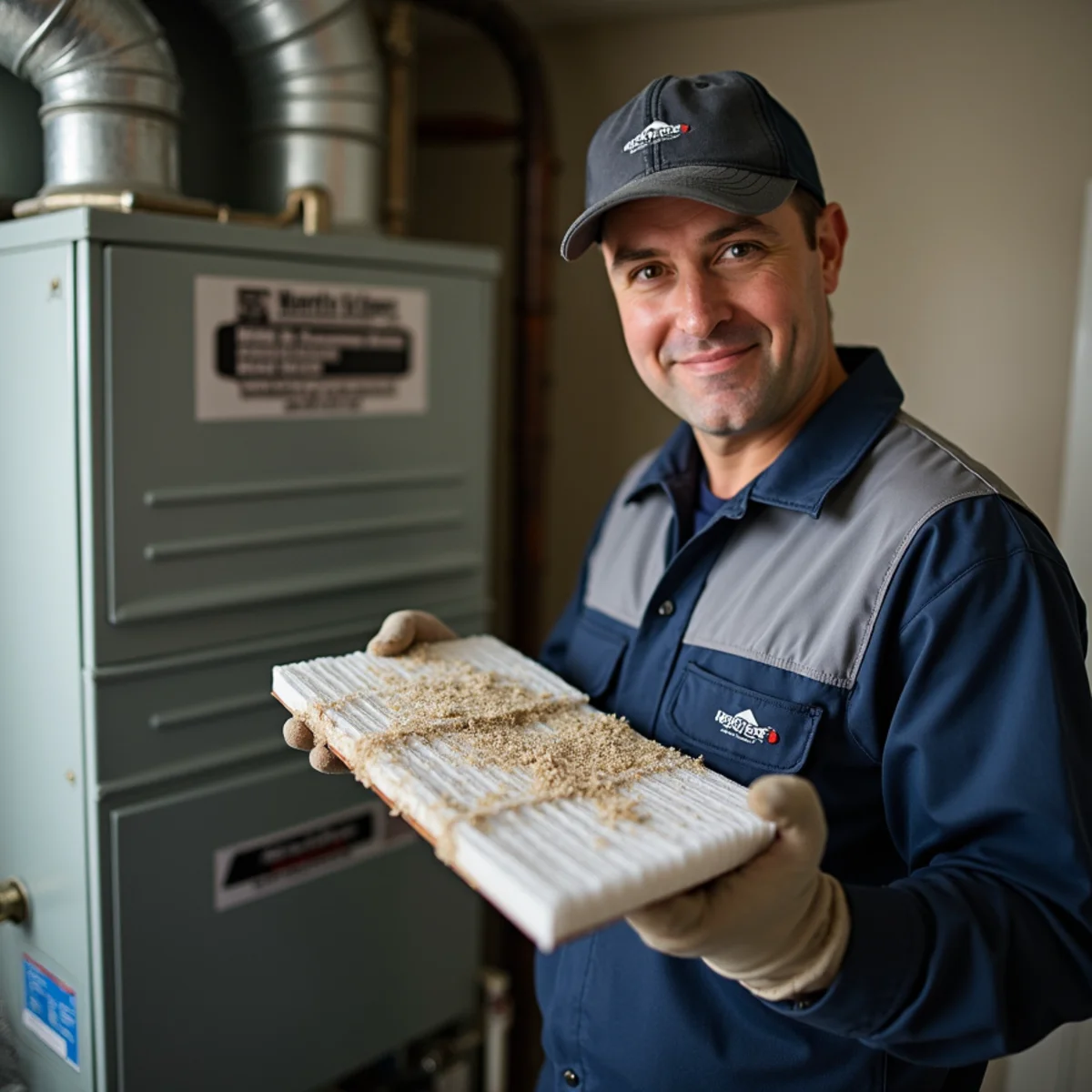
Your furnace or air handler circulates the entire volume of your house several times an hour, which makes the filter slot the single best place to catch pollen. Most homes ship with a cheap MERV 4 filter that stops lint and little else. Step up to a MERV 11 to 13 pleated filter and you capture the majority of pollen grains, which are large as airborne particles go. Anything higher than MERV 13 can choke residential blowers, so do not assume more is better. If you want that hospital-grade level, it needs a properly sized media cabinet, which is one of the upgrades our indoor air quality services team sizes to your specific blower.
Do not starve your blower
A too-dense filter forces the blower to work against high static pressure. That can overheat the motor, ice the coil in cooling season, and short-cycle the furnace in winter. If your new "allergy" filter made the system louder or weaker, it is the wrong filter for that equipment. Match the filter to the system, not the marketing.
2. Add dedicated cleaning for the worst rooms
- A true HEPA portable purifier in the bedroom, sized to the room square footage, gives you clean sleeping air even during peak ragweed.
- A whole-home media air cleaner or electronic air cleaner mounted at the air handler treats every room the ducts reach.
- For no-duct historic homes, a ductless mini-split with a washable multi-stage filter doubles as a room air cleaner while it heats and cools.
3. Stop pollen from getting in
Filtration only works on air that reaches the filter. Pollen also pours in through leaky windows, unsealed attic hatches, and gaps around recessed lights. Weatherstrip and caulk the obvious leaks, keep windows shut during the morning pollen peak, and run your system fan on "circulate" rather than "auto" during high-count days so air keeps passing the filter. A tight, well-sealed home is easier to keep clean and cheaper to heat and cool, which is why sealing pays off twice.
Humidity is the quiet multiplier
Keep indoor relative humidity between 40 and 50 percent. Below that, sinuses dry and irritate; above it, you invite mold and dust mites, which pile allergy triggers on top of the pollen. A properly sized AC pulls humidity as it cools, but an oversized unit cools fast and shuts off before it dehumidifies. If your house feels cold and clammy at the same time, sizing is likely the culprit, and a room-by-room load calculation is the fix rather than a bigger box.
Pollen peaks across an Orange County year
| Season | Main source | What to prioritize |
|---|---|---|
| Late Mar–May | Tree pollen (oak, maple, birch) | Upgrade filter, seal windows |
| Jun–Jul | Grass pollen from hayfields | Run fan on circulate, HEPA in bedrooms |
| Aug–first frost | Ragweed | Whole-home air cleaner, keep windows shut |
A quick word for allergy-sensitive households
If someone in the home has asthma or severe seasonal allergies, do not wait for symptoms to spike before acting. Change filters on schedule, wipe down return grilles, and consider a spring maintenance visit that includes a coil and blower cleaning. We serve allergy-prone families across Gardnertown and the river towns like Marlboro, and the difference a clean, properly filtered system makes is usually obvious within a week.
Fresh air without the pollen
Homeowners tightening up a house sometimes worry it will feel stuffy. The answer is not to crack a window during the morning pollen peak, it is mechanical ventilation that filters as it brings air in. An energy-recovery ventilator pulls a controlled amount of fresh air through a filter while capturing heat from the air it exhausts, so you get fresh air without dumping your heating or cooling out the wall. Paired with good filtration, it keeps a sealed Newburgh home from feeling closed up while holding the pollen count indoors far below what it is on the front porch. For a tight historic home, it is often the missing piece that makes the whole air-quality plan work.
Breathe easier this allergy season
Let us match the right filtration and air-cleaning setup to your home and your blower. Call HVAC Newburgh NY at +1 (327) 210-5999 for an indoor air quality assessment across Gardnertown and the greater Newburgh area.
HVAC Newburgh NY · 48 Carter St, Newburgh, NY 12550
- Indoor pollen is one of the few air problems you can measurably beat — filtration, sealing, and humidity control work together, not alone.
- A MERV 11 to 13 pleated filter catches most pollen without starving a residential blower; go higher only with a properly sized media cabinet.
- Add a true HEPA purifier in the bedroom to cover the hours the system idles, especially during peak ragweed.
- Weatherstrip and caulk the leaks pollen pours through, and keep windows shut during the morning pollen peak.
- Hold indoor humidity between 40 and 50 percent — drier irritates sinuses, damper invites mold and dust mites.
- If someone has asthma or severe allergies, change filters on schedule and book a spring coil-and-blower cleaning.
Frequently asked
For most Newburgh homes, a MERV 11 to 13 pleated filter is the sweet spot. It captures pollen and fine dust while still letting your blower breathe. Going higher usually needs a dedicated media cabinet so the system is not starved for airflow.