
Newburgh's older housing stock runs on both boilers and furnaces. They heat very differently — and swapping from one to the other is a bigger project than people expect. Here's what each does best.
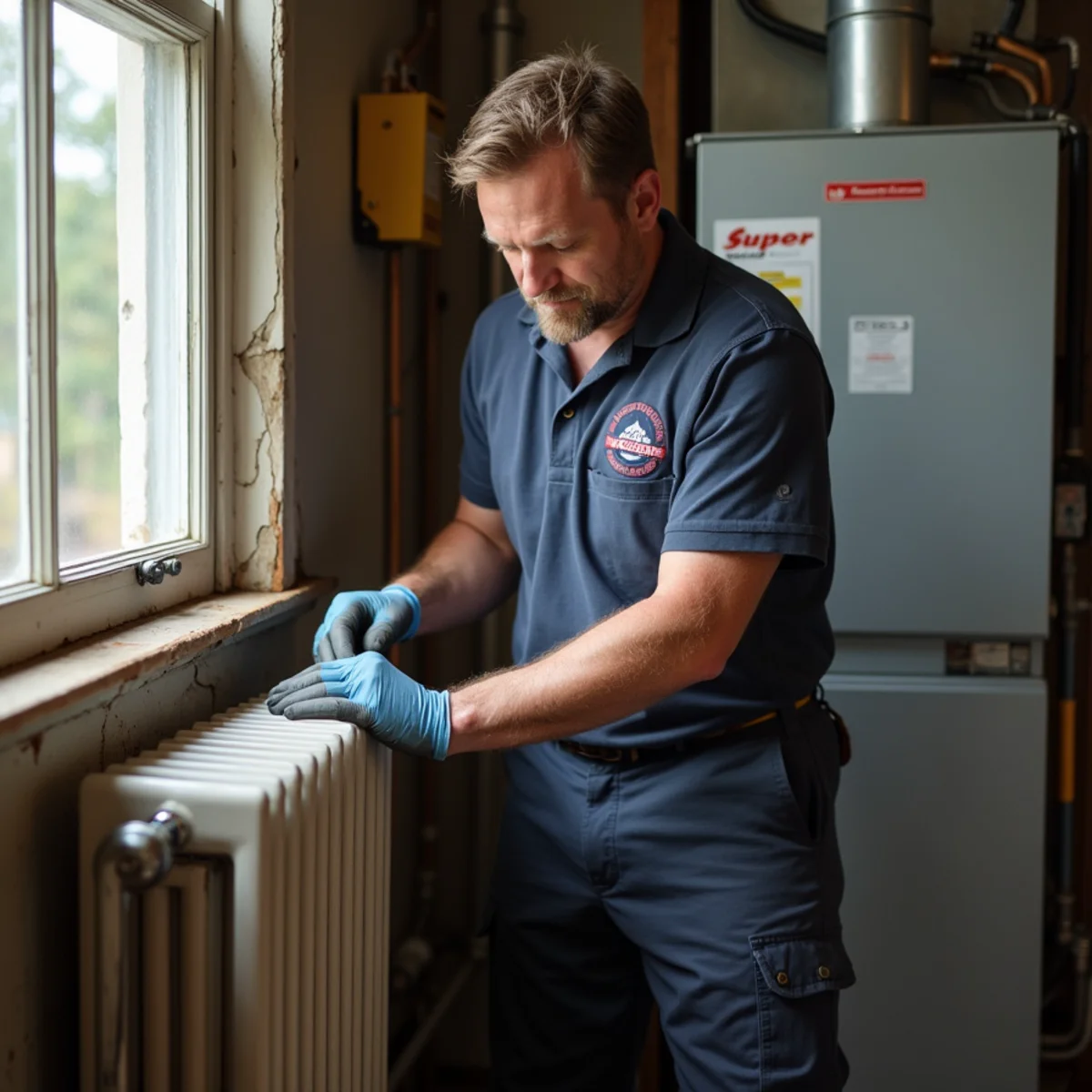
A boiler heats water and sends it to radiators or baseboards, giving the steady, even warmth you feel in Newburgh's older brick homes. A furnace heats air and blows it through ducts — faster to warm up, and it shares ductwork with central AC. In a lot of our historic housing the boiler is already there; replacing it with a furnace means adding ductwork, which is rarely worth it.
We service both across the East End Historic District and all of Orange County. Here's how to think about it.
The real difference: how the heat gets to you
Forced-air heat from a furnace warms a room quickly but can feel drafty and dries the air out. Radiant heat from a boiler takes a little longer to come up but holds a comfortable, even temperature with no blowing air — a big reason century-old Newburgh homes with radiators still feel so cozy. Boilers are also quieter and don't push dust around the house.
The trade-off: a boiler only heats. You still need a separate system for cooling — usually ductless mini-splits in a home that was never ducted. A furnace shares ducts with central AC, so if you already have forced air, adding or replacing cooling is simpler.
Boiler vs. furnace at a glance
Choosing between a boiler and a furnace in Newburgh
| Factor | Boiler (radiators / baseboard) | Furnace (forced air) |
|---|---|---|
| Comfort | Even, quiet radiant warmth | Fast warm-up; can feel drafty |
| Air quality | No blown dust; no drying | Moves dust; can dry air |
| Cooling | Needs separate system (mini-splits) | Shares ducts with central AC |
| Best for | Older homes already on radiators | Homes with existing ductwork |
| Install if switching | Add ductwork — major job | Add radiators/piping — major job |
| Lifespan | 15–30 years (cast iron lasts) | 15–20 years |
Steam vs. hot-water boilers
If you have a boiler, it's one of two kinds. Steam boilers (common in pre-1930s Newburgh homes) send steam up to radiators — simple but finicky to balance. Hot-water boilers circulate heated water and are easier to zone. Both are worth keeping and upgrading rather than ripping out for forced air.
Our honest recommendation
If your home already has a boiler and radiators, keep the boiler. A new high-efficiency unit paired with careful boiler installation gives you decades of comfortable, even heat for far less disruption than converting to ducts. When radiators run cold or the boiler is unreliable, boiler repair is usually the smarter first move.
If your home is already ducted — most of the Town's 1960s–80s split-levels and colonials — a furnace makes sense and lets you keep central AC. Either way, size it with a Manual J calculation so the system matches the home.
Boiler or furnace — we do both right
Tell us what you have and what's not working, and we'll recommend the system that fits your home and budget. Call HVAC Newburgh NY at +1 (327) 210-5999.
HVAC Newburgh NY · 48 Carter St, Newburgh, NY 12550
Frequently asked
Usually not. If your home has radiators and no ductwork, converting to forced air means installing ducts throughout — expensive and disruptive, and you'd lose the even radiant comfort. A modern high-efficiency boiler is almost always the better investment.