
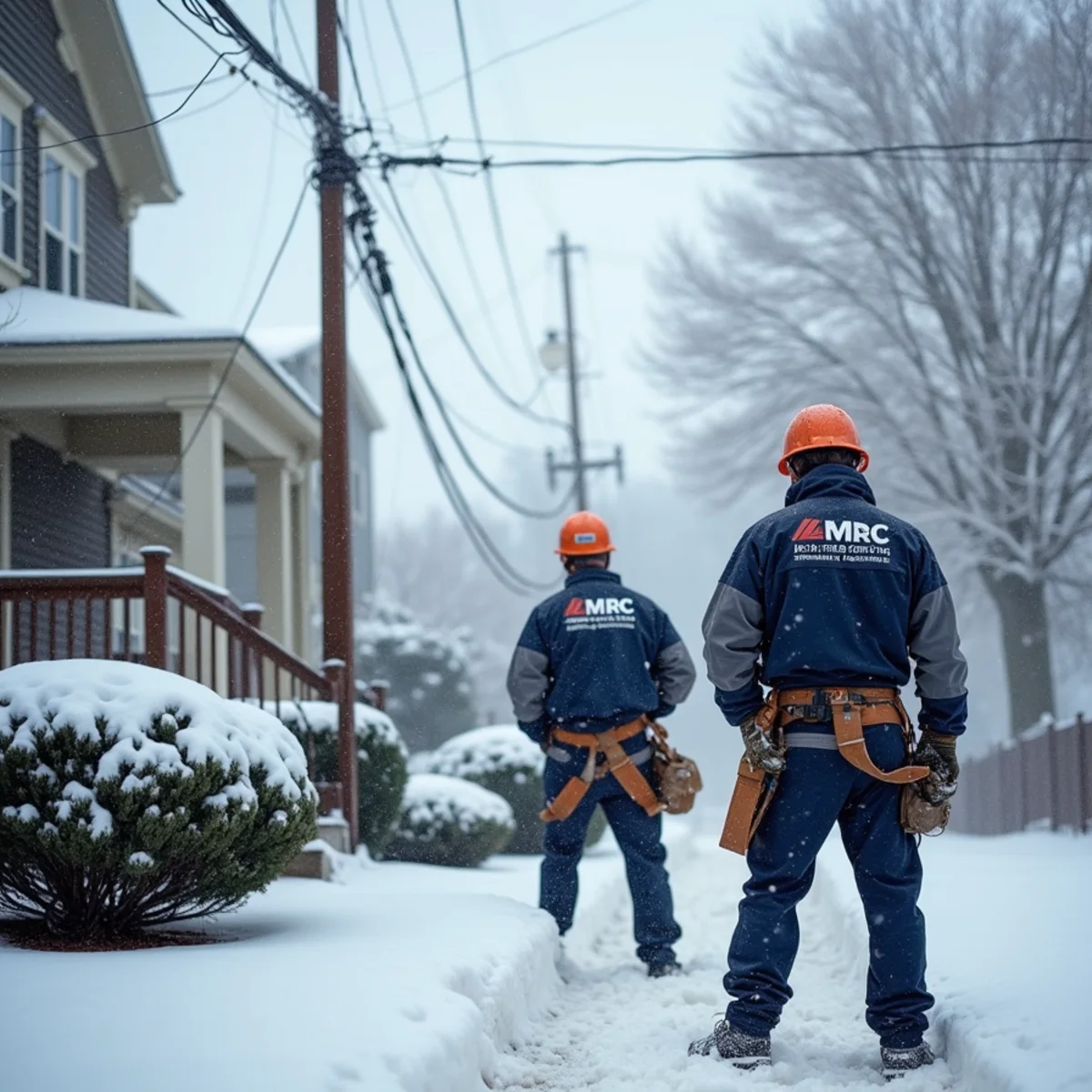
Ice storms don't just cut the power — they can damage your heating system on the way back on. Here's how to protect your furnace, boiler, and pipes through an outage.
An Orange County ice storm has a signature move: the trees come down, the lines snap, and the power goes out — sometimes for hours, sometimes for days. In the middle of a February cold spell, that's a serious problem, because even a gas furnace or an oil boiler needs electricity to run its controls, igniters, and blowers. No power means no heat, and no heat means a house full of water-filled pipes and radiators sliding toward freezing.
Then there's the second hit most people don't see coming: the surge when power is restored can fry the very control boards your heat depends on. Protect the system on both ends of the outage and you'll come through the storm with your heating intact. Here's how.
The moment the power goes out
- 1
Turn your heating system OFF at the thermostat
This is the single most important step, and it protects you when the power returns. A system left "on" gets slammed by the restoration surge; a system switched off rides it out safely.
- 2
Note the time and start conserving heat
Close off unused rooms, gather everyone into one space, and seal drafts. In a well-sealed home you may hold livable temperatures for hours before pipes are at risk.
- 3
Protect your plumbing early
Open sink cabinets, let a trickle run at the farthest faucet, and locate your main shutoff. In an ice storm, outages outlast most people's patience, so act early.
Generators and grills stay outside — always
Never run a portable generator, grill, or camp stove indoors, in a garage, or near a window. Carbon monoxide from these kills every winter during storms. Keep generators at least 20 feet from the house with the exhaust pointed away.
Staying warm safely during the outage
- Layer clothing and use blankets before reaching for supplemental heat — trapped body heat is safer than any appliance.
- If you use a wood stove or fireplace, keep the damper set correctly and never leave a fire unattended overnight.
- Battery and USB heaters are limited but safe. Anything that burns fuel belongs outdoors.
- Keep phones charged from a car or power bank so you can reach help and get outage updates.
When the power comes back on
Don't rush to flip everything on at once. A restored grid often carries voltage spikes and brownout conditions as the utility rebalances load, and those are hard on electronics.
- 1
Wait a few minutes
Let the grid stabilize before you power up sensitive equipment. A short wait dodges the worst of the restoration surge.
- 2
Turn the heating system back on last
Bring it up after other loads have settled. Then watch and listen — it should start its normal ignition sequence.
- 3
Listen for a clean start
If the furnace or boiler clicks, buzzes, throws error codes, or won't fire, shut it off. A surge may have damaged the control board or igniter.
Consider surge protection before the next storm
A whole-house surge protector at the panel, or a dedicated one on the furnace circuit, is inexpensive insurance against the control-board failures that ice storms cause. Ask us to add it during your next tune-up.
If your heat won't restart after the storm
When the lights come back but the heat doesn't, you need emergency HVAC service, and after a widespread ice storm you're not the only one calling. We prioritize no-heat homes across Orange County, from the City and Town of Newburgh out to Washingtonville, Vails Gate, and New Windsor. Surge-damaged igniters, control boards, and blower motors are common after a restoration, and we carry the parts that get systems running again. If your house held its temperature through the outage, you have some breathing room; if it's already dropping into the 40s, tell us that when you call so we can slot you in accordingly and talk you through protecting your pipes in the meantime.
If the storm took out an aging furnace or boiler entirely, that's a moment to weigh a modern replacement over another patch, and our furnace repair team can lay out the honest options. Either way, get on the schedule early — after an ice storm, the queue fills fast.
Prepare before the next one hits
Ice storms are a fact of Hudson Valley winters, not a surprise. Add surge protection to your heating circuit, keep the system tuned so it starts reliably under stress, insulate vulnerable pipes, and keep a cold-weather kit with flashlights, blankets, and a way to charge a phone. It's also worth knowing whether your model can run on a portable generator, and having the right cord and a safe outdoor spot to place one before you ever need it. The households that handle outages best aren't lucky — they're ready, and readiness is cheap compared to a burst pipe or a fried control board.
Heat won't restart after the storm?
Get an Orange County priority no-heat call on the books. Phone HVAC Newburgh NY at +1 (327) 210-5999 for fast emergency service after any ice storm.
HVAC Newburgh NY · 48 Carter St, Newburgh, NY 12550
- Even a gas furnace or oil boiler needs electricity for its controls, igniter, and blower — no power means no heat, and no heat means pipes at risk.
- The moment the power drops, switch the heating system OFF at the thermostat so the restoration surge cannot fry the control board.
- Start conserving heat and protecting plumbing early — ice-storm outages routinely outlast people's patience.
- Keep generators, grills, and camp stoves outside and at least 20 feet from the house, exhaust pointed away — CO kills every storm season.
- When power returns, wait a few minutes for the grid to stabilize before powering sensitive equipment, and bring the heat back on last.
- Listen for a clean ignition. Buzzing, error codes, or a no-fire start after the storm points to surge damage — shut it off and call.
- Before the next storm, add a whole-house or furnace-circuit surge protector; it is cheap insurance against the control-board failures ice storms cause.
Frequently asked
When the utility restores power, the returning voltage often surges, which can destroy your furnace's control board and igniter. Switching the system off at the thermostat during the outage protects it, and you simply turn it back on a few minutes after power is stable.