
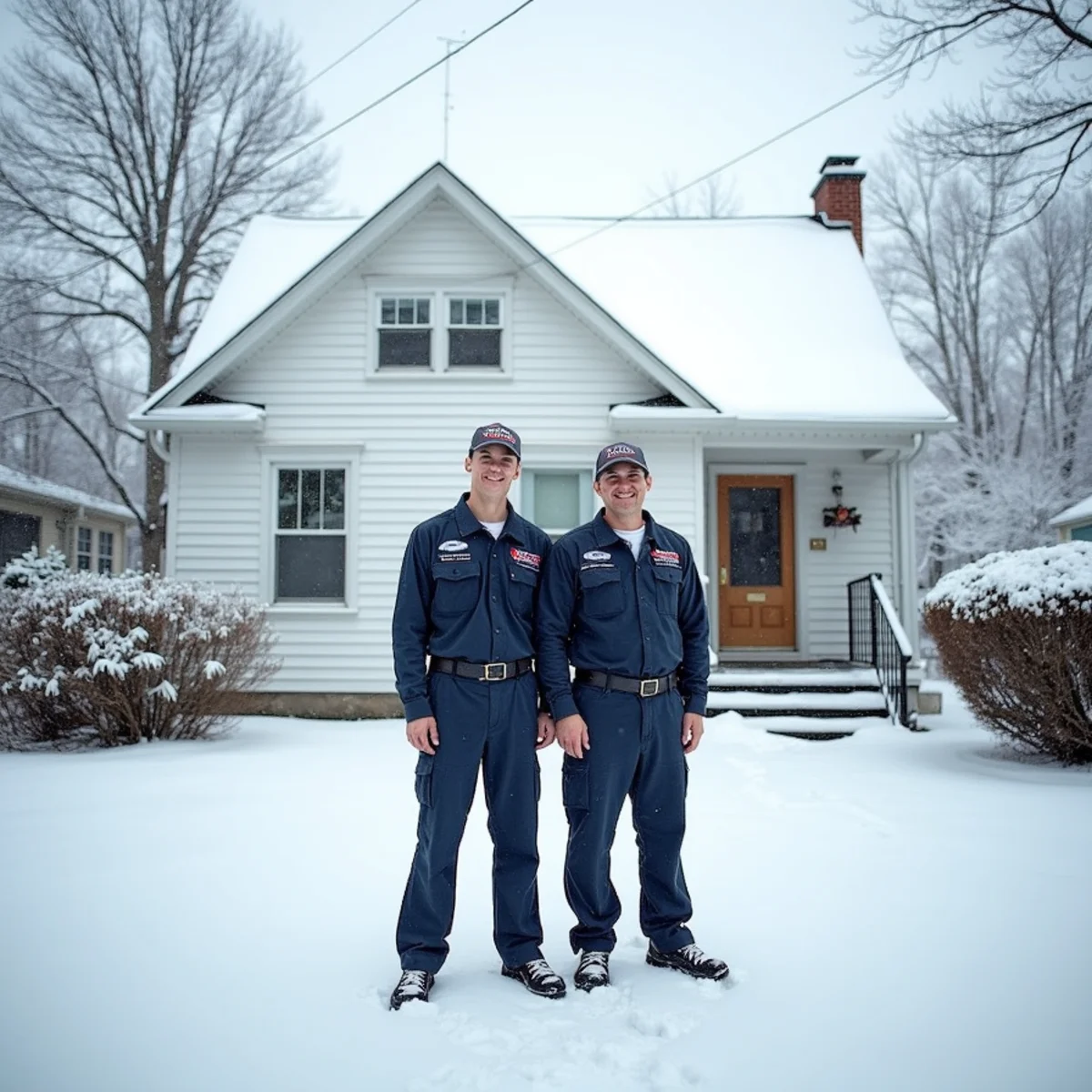
The big nor'easters that hit the Hudson Valley left thousands without power for days in the cold. Here's the hard lesson they taught about backup heat — and how to be ready before the next one.
Ask anyone who lived through the worst nor'easters to hit the Hudson Valley and they'll remember the same thing: not the snow, but the cold that came after the lights went out. When a major winter storm knocks down power lines across Orange County, the outage can stretch for days — and in that time, the temperature inside an unheated home falls fast. The March 2018 storms in particular left large swaths of the region dark and cold well into a week for some. The lesson those events drove home is simple and uncomfortable: nearly every heating system in Newburgh needs electricity to run, and a heating system that won't run in an outage isn't backup at all.
The surprise: your "gas heat" still needs power
A lot of homeowners assume that because their furnace or boiler burns gas or oil, it'll keep working when the power's out. It won't. A modern gas furnace needs electricity for its blower motor, ignition, and control board. A boiler needs power for its circulator pumps and controls. Even most oil systems need electricity to fire. Cut the power, and the fuel doesn't matter — the system sits dark. That realization, in the middle of a freezing multi-day outage, is exactly what caught so many Newburgh families off guard.
Never use a stove, oven, or outdoor heater indoors for heat
Every winter, outages send people to dangerous improvised heat. Never run a gas oven, charcoal grill, camp stove, or any device that produces exhaust indoors — they release carbon monoxide that kills silently in an enclosed space. Keep generators outdoors and far from windows. Make sure you have working carbon monoxide detectors before storm season, not after.
What real backup heat looks like
There's no single right answer, but the households that weather these outages best have planned for one of these:
A whole-home standby generator
A permanently installed standby generator, wired to your electrical panel and fueled by natural gas or propane, starts automatically when the power drops and runs your furnace, boiler, or heat pump along with the rest of the house. It's the most complete answer for anyone who can't afford to lose heat — think medical needs, young kids, or elderly family. It's an investment, but for a home that's been burned by a long outage, it's the one that lets life continue almost normally.
A portable generator sized for the heating system
A properly sized portable generator with a transfer switch installed by an electrician can power your furnace or boiler during an outage at a fraction of a standby unit's cost. The catch is that it's manual — you have to set it up, run it outdoors, and refuel it — and it should never be plugged directly into an outlet or run in an attached garage. Done correctly with a transfer switch, it keeps the heat on.
A fuel-flexible backup like a wood or pellet stove
A single non-electric heat source — a properly installed wood or pellet stove, or a vented gas fireplace with a battery or standing pilot — can keep one part of the house survivable even with no power at all. It won't heat the whole home, but a warm room to gather in changes the calculus of a multi-day outage entirely.
Whatever route you choose, size it honestly. A generator that can't actually start your furnace's blower and controls, or a wood stove tucked in a corner it can't heat past, gives false comfort on the night it matters. The time to confirm your backup can carry the real load is before the storm, when there's no pressure and plenty of daylight to test it.
Where heat pumps fit
Heat pumps are efficient and increasingly popular here, but like any electric heat they go down with the grid unless they're on a generator. If you're moving toward a heat pump — perhaps with help from New York's clean-heat incentives — build the backup power question into the plan from the start rather than discovering the gap during a storm. Pairing a heat pump with a standby generator gives you both efficiency and resilience.
Prepare before the season, not during the storm
The time to sort out backup heat is a calm week in the fall, not the night the forecast turns. Have your primary system serviced so it's reliable, decide on a backup strategy that fits your home and budget, and make sure any generator is tested and fueled before the season. When a system does fail mid-storm, our emergency furnace repair team responds across the City and Town of Newburgh with an average 60 to 90 minute response — but the goal is to never be in that spot, and a little planning gets you there.
We help homeowners throughout the Newburgh area and out to Cornwall build heating setups that hold up when the grid doesn't. The nor'easters taught the whole region a lesson in a single cold week. The families who took it to heart don't dread the forecast the way they used to.
Need a hand from a local tech?
Call for same-day service across Newburgh and the Hudson Valley, or request a free written estimate.
HVAC Newburgh NY · 48 Carter St, Newburgh, NY 12550
Backup heat options for a multi-day winter outage
| Backup option | What it powers | Trade-off |
|---|---|---|
| Whole-home standby generator | Furnace, boiler, or heat pump plus the whole house, automatically | Highest cost; the most complete, hands-off answer |
| Portable generator with a transfer switch | Your furnace or boiler during the outage | Lower cost; manual setup, runs outdoors, needs refueling |
| Wood or pellet stove | One room, with no electricity at all | Won't heat the whole house; needs a safe, proper install |
| Vented gas fireplace (battery or standing pilot) | A warm gathering room off-grid | Zone heat only; confirm it runs without power |
| Heat pump on its own | Nothing in an outage unless it's on a generator | Efficient, but goes down with the grid |
Frequently asked
No. A gas furnace still needs electricity for its blower, ignition, and controls, and a boiler needs power for its circulator pumps — so both go dark in an outage regardless of the fuel. The only way to keep them running is a generator or a transfer switch, or a separate non-electric backup heat source.