
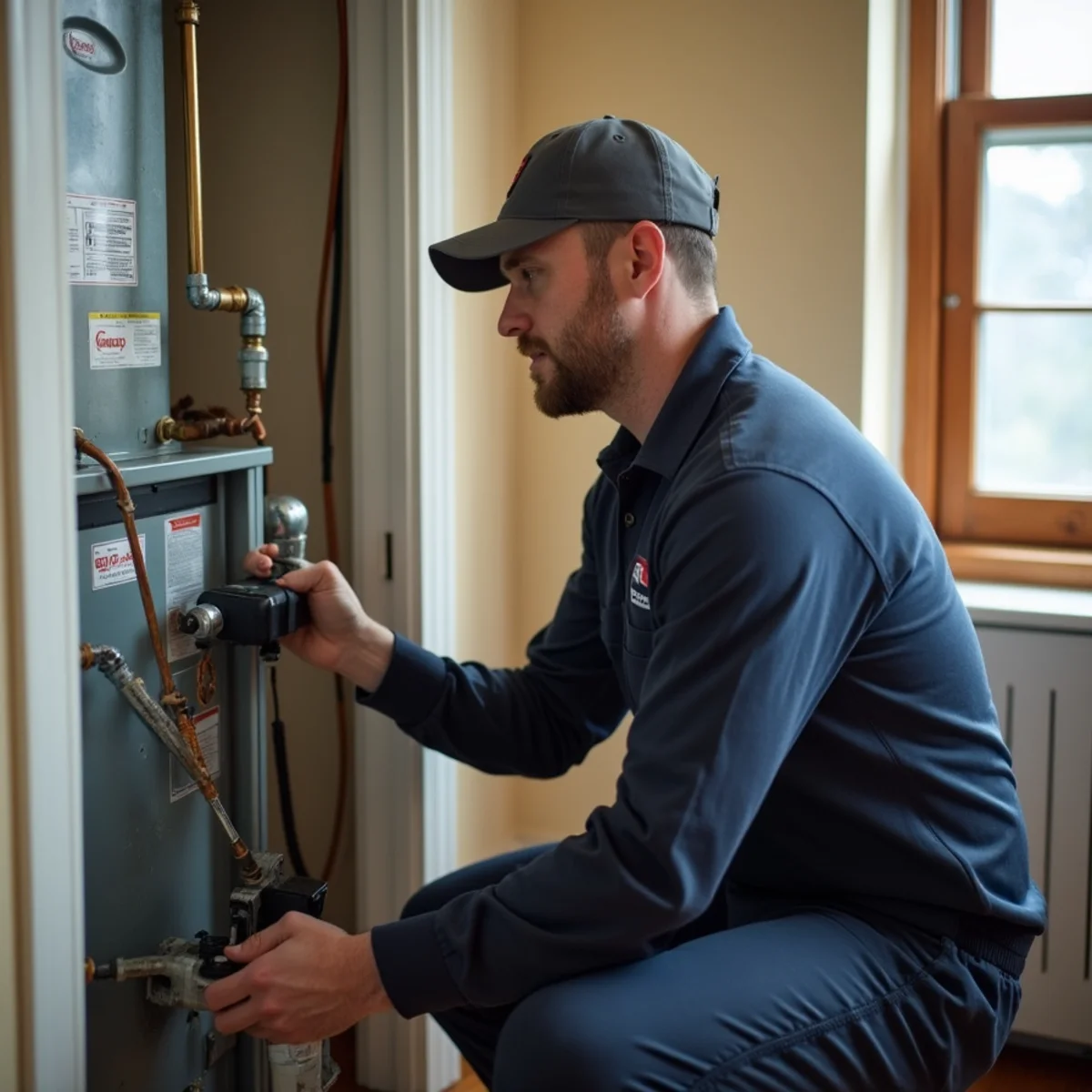
Turnover between tenants is the one window a landlord fully controls the property. Use it to service the HVAC, and you trade a handful of scheduled hours for a season without 2 a.m. no-heat calls.
Rental HVAC fails on a different schedule than owner-occupied HVAC, because nobody in the building has a reason to notice the warning signs. Tenants do not change filters they did not buy, they do not report a boiler that is a little noisy, and they absolutely do call at midnight when the heat quits in January. For landlords along the Broadway Corridor and the student-heavy blocks near the college, turnover between leases is the one predictable window to get ahead of all of it. Here is the playbook I give property owners.
Why turnover is the right moment
Between tenants, the unit is empty, you have full access, and you are already coordinating cleaning and repairs. Folding HVAC service into that window costs you almost nothing in extra disruption and saves you from scheduling around a tenant's work hours later. It also means the next lease starts with a system you know works, which heads off the emergency callbacks that eat your margin.
The turnover HVAC checklist
- 1
Full system service
Have the furnace, boiler, or heat pump professionally serviced so the next tenant starts on a clean, tested system. This is the core of the visit.
- 2
Fresh filter and a labeled spare shelf
Install a new filter and leave a few labeled spares with the correct size marked, so a conscientious tenant can actually keep up with it.
- 3
Check and clean the condensate drain
A clogged AC drain floods and causes tenant complaints and property damage. Clear it during turnover when the unit is accessible.
- 4
Test every thermostat and CO detector
Confirm the thermostat works and is set to a sensible range, and verify a working carbon monoxide detector on every level. This is a life-safety must, not an option.
- 5
Document the condition
Photograph the equipment, note the age and model, and log the service date so you have a maintenance history for each unit.
CO detectors are a legal and safety line
New York requires working carbon monoxide detectors in residential rentals, and turnover is when you verify and replace them. Combustion heating in an occupied rental with a dead or missing CO detector is a risk no landlord should carry. Test them, log them, and replace on schedule.
Special notes for student housing
Student rentals turn over on a tight late-summer schedule, often with several units flipping in the same two weeks, and tenants who have never operated a boiler or thermostat before. That combination argues for simple, tamper-resistant controls, clear written instructions left in the unit, and a maintenance service that can handle several units in one coordinated visit. Setting the thermostat range and locking out the extremes prevents both frozen pipes from a unit left off and sky-high bills from one left at 80.
Build a relationship before the emergency
The landlords who sleep through Newburgh winters are the ones with a service partner already on file before anything breaks. When your vendor knows your properties, has the model numbers, and can prioritize a no-heat call at a tenant-occupied unit, a 2 a.m. failure becomes a fast fix instead of a scramble. Our commercial and multi-unit HVAC team sets up turnover programs and priority service for rental owners across the Broadway Corridor and greater Newburgh. And when the heat does fail on an occupied unit, our emergency HVAC crew averages a 60 to 90 minute response.
The economics landlords actually feel
Deferred HVAC maintenance is a false economy in a rental. The furnace that gets no attention for five years does not save you the service cost, it postpones it into an emergency call, usually at night, usually at premium rates, usually with an angry tenant and possibly a habitability complaint attached. A tenant without heat in a Newburgh January is not a problem you can let wait, legally or morally. Turnover service is how you convert an unpredictable emergency expense into a small, planned one you control.
There is a leasing angle too. A rental that shows well with heat and air that obviously work, clean vents, a fresh filter, a thermostat that responds, signals a landlord who maintains the property. That reputation fills units faster and attracts tenants who treat the place well, which lowers your costs on the next turnover. HVAC you can point to is a quiet selling feature.
Simple lease and signage moves
- Spell out filter responsibility in the lease so expectations are clear from day one.
- Post a small laminated card by the thermostat with basic operation and a maintenance number.
- Ask tenants in writing to report odd smells, noises, or weak heat early rather than living with them.
- Keep a per-unit log of equipment age and service dates so you can plan replacements across the portfolio.
Right-size the thermostat range
Locking the thermostat out of the extremes prevents the two costly failures of student and short-term rentals: a unit left off until pipes freeze, and one cranked to 80 that runs up a bill and wears out the equipment. A sensible min and max protects the building and your margins.
Turn over units with confidence
Set up a turnover HVAC program for your Newburgh rentals. Call HVAC Newburgh NY at +1 (327) 210-5999 for coordinated service across the Broadway Corridor.
HVAC Newburgh NY · 48 Carter St, Newburgh, NY 12550
Rental HVAC: who handles what
| Task | Landlord | Tenant |
|---|---|---|
| Professional system service | Yes — at turnover between leases | — |
| Routine filter changes | Provide labeled spares | Replace on schedule |
| CO detector install and testing | Install and verify every level | Report a sounding alarm |
| Odd smells, noises, or weak heat | Respond fast | Report early, in writing |
| Thermostat range | Lock a sensible min and max | Operate within the range |
Frequently asked
The best window is turnover between tenants, when the unit is empty and you already have full access. A between-lease service means the next tenant starts on a tested system, which sharply cuts the midwinter no-heat calls that eat into your returns.