
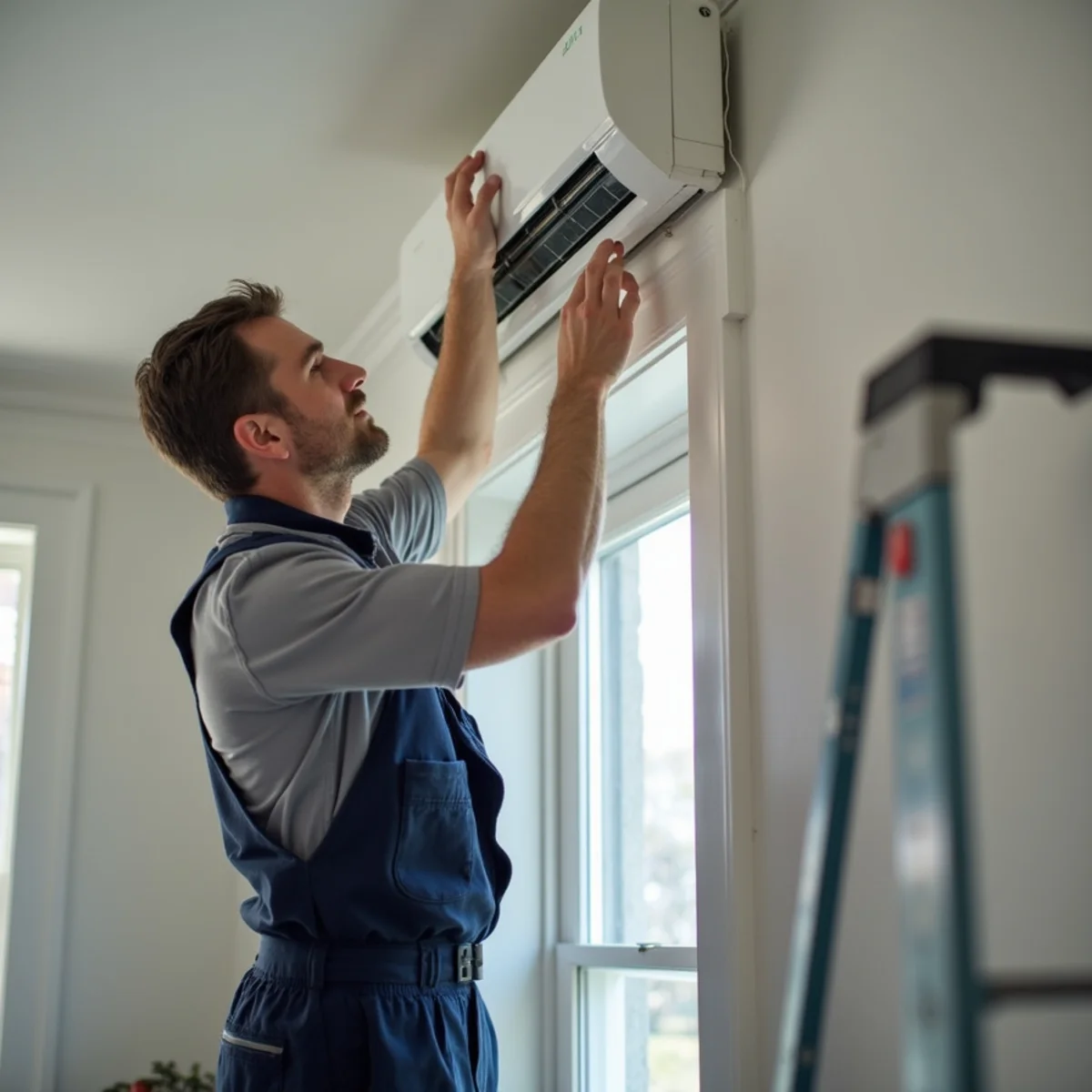
A ductless head that drips water down the wall isn't leaking refrigerant — it's a condensate problem. Here's how the drainage works, why it clogs, and what you can safely check yourself.
You walk past your wall-mounted mini-split and notice a wet streak running down the plaster, or a small puddle building on the floor beneath it. It's alarming — but before you picture an expensive refrigerant failure, know that water dripping from an indoor head is almost always a condensate drainage problem, not a refrigerant leak. Refrigerant is a gas; it doesn't drip as water. What you're seeing is the moisture the unit pulled out of your air, and it's going the wrong way.
Ductless mini-splits have become the go-to cooling and heating retrofit across Newburgh's older, duct-free homes, and their one recurring weak point is drainage. Understanding how that drain works makes the fix — and the prevention — straightforward.
How a mini-split gets rid of water
When the indoor head runs in cooling mode, warm room air passes over a cold coil and moisture condenses out, just like a cold glass sweats on a humid day. That water collects in a small pan inside the head and flows by gravity through a condensate drain line — a thin tube bundled with the refrigerant lines inside the line-set cover on your wall — out through the exterior wall to the ground. The whole system depends on that line sloping continuously downhill. Anything that blocks it or breaks the slope sends water backward into your room instead.
The usual causes, most common first
- A clogged drain line — algae, dust, and biofilm build up inside the tube and dam the water back into the head
- A dirty filter or coil, which causes excess condensation and can let water bypass the pan
- A drain line that lost its slope, sagging or kinked behind furniture or in the line-set cover
- A cracked or dislodged drain pan inside the head
- A failed condensate pump, on installs where the drain has to be pumped uphill to an exit point
- Ice on the coil that melts and overwhelms the pan — often a sign of low airflow or a refrigerant issue
What you can safely check
Clean or replace the filters
Open the front panel of the indoor head and slide out the mesh filters. In our pollen-heavy Hudson Valley spring and summer they clog fast. Rinse them under lukewarm water, let them dry fully, and reinstall. A choked filter is the single most common reason a mini-split starts misbehaving, and clearing it resolves a share of drip complaints on its own.
Look at where the drain line exits outside
Walk outside and find where the line-set cover ends near the ground. In cooling season you should see the drain tube dripping or trickling when the unit runs. If it's bone dry while the head is leaking indoors, the line is blocked. Check that the tube end isn't crushed against the foundation, buried in mulch, or full of insect nests — wasps and spiders love to plug the opening.
A wet-dry vacuum can clear a simple clog
For a minor drain clog, holding a wet-dry vacuum over the outdoor end of the condensate line for a minute can pull the blockage free. Seal around the tube with a rag for suction. If the water doesn't start flowing again, or the line is buried inside the wall, stop there and call — forcing it risks damaging the pan or connections.
While you're outside, check the line-set cover itself. On installs a decade or more old, the covers can loosen or pull away from the wall, and a drain tube that slips out of its channel loses the continuous downhill slope it depends on. Debris and insect nests collect inside a gapping cover, too. Reseating the tube and clearing the cover is sometimes all it takes to get water flowing the right way again.
When it's time for a technician
If the filters are clean and the outdoor line is clear but the head still drips, the problem is inside the unit or the wall — a cracked pan, a sloped-wrong line hidden in the line-set cover, a dead condensate pump, or coil icing that points to an airflow or charge issue. These need the head opened and the drainage tested under running conditions. Our ductless mini-split specialists diagnose and re-pitch drain lines, replace pumps and pans, and flush the system properly so it drains for good.
We service a lot of ductless installs across the river in Beacon and throughout the Newburgh area, and a recurring pattern is a leak that traces back to a rushed original installation — a drain line run nearly flat, or terminated somewhere it can clog. Drainage problems are usually installation problems in disguise. When the head is icing over rather than simply dripping, that's a different signal, and it's worth ruling out a refrigerant issue rather than just chasing the water.
Keep it from happening again
Rinse the head's filters every four to six weeks in cooling season, keep furniture and mulch away from the outdoor drain exit, and have the drain line flushed during annual service. A mini-split that's cleaned and drained on schedule rarely leaks — and catching a slow drip early keeps it from turning into stained walls or warped flooring.
Need a hand from a local tech?
Call for same-day service across Newburgh and the Hudson Valley, or request a free written estimate.
HVAC Newburgh NY · 48 Carter St, Newburgh, NY 12550
Mini-split water leak: symptom, cause, and what to do
| Symptom | Likely cause | What to do |
|---|---|---|
| Water down the wall, outdoor drain bone dry | Clogged condensate line | Clear it with a wet-dry vacuum at the outdoor end |
| Dripping worse in humid weather | A marginal drain overwhelmed by extra condensate | Have the line re-pitched and flushed |
| Head ices up, then drips as it melts | Low airflow or a refrigerant issue | Clean the filters; if it persists, call for a charge check |
| Dripping plus dirty mesh filters | Restricted airflow, water bypassing the pan | Rinse and dry the filters, then reinstall |
| Drain tube slipped out of the line-set cover | Lost its continuous downhill slope | Reseat the tube and clear the cover |
| Filters clean, outdoor line clear, still dripping | Cracked pan or a failed condensate pump | Book a technician to open and test the head |
Frequently asked
The water itself is just condensation, not refrigerant, so it's not hazardous — but it can stain walls, warp floors, and grow mold if ignored. Turn the unit off to stop the drip, check the filters and outdoor drain line, and get it serviced if it keeps leaking after cleaning.