
Orange County has seen tornadoes, ice storms, and days-long outages. Severe weather here is a question of when, not if — and a little HVAC preparation keeps a storm from becoming a heating or cooling emergency.
On a November afternoon in 1989, a tornado tore through Coldenham on the edge of Newburgh, striking an elementary school and killing nine children when a wall collapsed. It remains one of the most devastating severe-weather events in Orange County's history, and a sober reminder that the Hudson Valley is not immune to violent weather. We don't invoke it lightly. But the broader lesson holds for every homeowner here: severe weather — tornadoes, microbursts, ice storms, flooding, nor'easters, and the long power outages that follow — is a recurring reality in this region, and your heating and cooling systems are exposed to all of it.
Preparing your HVAC for severe weather won't stop a storm, but it can keep one from turning into a dangerous stretch without heat or cooling. Here's what matters.
Protect the outdoor equipment
Your air conditioner's condenser and any heat pump unit sit outside, fully exposed to wind, hail, flying debris, and flooding. High winds can drive branches and loose objects into the coil fins, hail can dent and degrade them, and floodwater can ruin the electrical components. A few steps go a long way:
- Before a severe storm, clear the yard of loose furniture, planters, and debris that wind can hurl into the unit
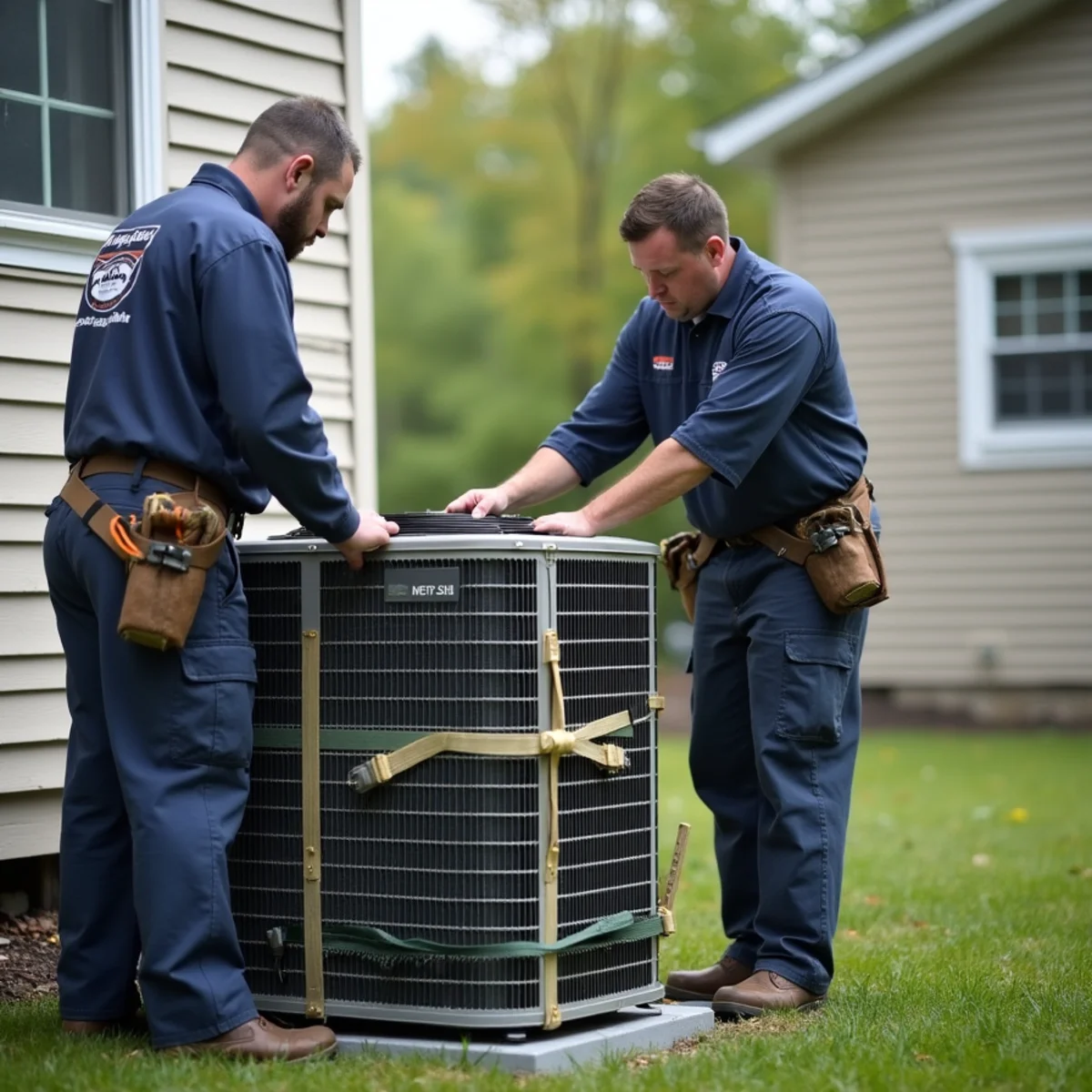
- Make sure the condenser is anchored to its pad — a properly secured unit resists being shifted or toppled by wind
- Trim back branches that overhang or crowd the outdoor unit before storm season
- In a flood-prone spot, know that a submerged condenser needs professional inspection before it's run again
- If a direct hit is forecast, shut the system off at the disconnect and thermostat so a power surge or debris strike doesn't fry it while running
After a storm, inspect before you run
Don't switch a storm-hit AC or heat pump back on until you've looked it over. Debris in the coil, a shifted unit, bent fins, or water intrusion can turn a start-up into serious damage. If the unit took a hit, took on water, or the power flickered hard, have it checked. Running a compromised system can destroy the compressor.
Guard against power surges
Severe storms bring lightning and grid instability, and the surges that follow are brutal on HVAC electronics — control boards, compressors, and variable-speed motors are expensive to replace. A whole-house surge protector installed at your electrical panel shields all of it, and dedicated protection for the HVAC circuits adds another layer. It's a modest cost against the damage a single strike can do to a modern system.
It helps to know how HVAC equipment actually fails under electrical stress. A nearby lightning strike rarely melts a system dramatically; far more often it quietly damages a control board or degrades a capacitor, and the unit then runs oddly or quits days later with no obvious link to the storm. That delayed failure is precisely why a post-storm inspection is worthwhile even when everything seems to have come through fine — the damage isn't always visible on day one.
Plan for the outage that follows
The storm passes; the outage lingers. Because every furnace, boiler, and heat pump needs electricity to run, a multi-day outage in cold weather is a heating emergency waiting to happen — the same hard lesson the region's big nor'easters taught about backup heat. If losing heat isn't an option for your household, a standby generator or a properly installed portable generator with a transfer switch keeps the system running. And never, ever bring a generator, grill, or unvented heater indoors — carbon monoxide from improvised heat kills every year.
Keep the system healthy year-round
A well-maintained system rides out stress far better than a neglected one. Loose electrical connections, a weak capacitor, or a marginal compressor are the components that fail first when a storm and a power surge test them. Regular HVAC maintenance tightens connections, checks electrical components, and catches the weak links before severe weather finds them for you. Going into storm season with a system that's been serviced is one of the simplest forms of preparation there is.
Have an emergency plan and a number ready
Even the best-prepared home can get hit. Know where your electrical panel and fuel shutoffs are, keep flashlights and working carbon monoxide detectors on hand, and have a plan for where to go if your home becomes unsafe or unheatable. When a storm does knock out your heating or cooling, our emergency HVAC team responds across the City and Town of Newburgh and the wider county with an average 60 to 90 minute response — but the households that prepare in advance are the ones who need that call the least.
We serve homeowners throughout the area, including Coldenham itself, and we build storm resilience into the systems we install and maintain. Orange County's weather history is a warning worth taking seriously. A few hours of preparation before the season keeps a severe-weather event from becoming a personal emergency.
Need a hand from a local tech?
Call for same-day service across Newburgh and the Hudson Valley, or request a free written estimate.
HVAC Newburgh NY · 48 Carter St, Newburgh, NY 12550
Severe-weather threats and how to prepare your HVAC
| Storm threat | HVAC risk | Prep step |
|---|---|---|
| High wind and flying debris | Bent coil fins, a shifted or toppled condenser | Clear the yard and confirm the unit is anchored to its pad |
| Hail | Dented, degraded condenser coil | Inspect after the storm; shield exposed units where practical |
| Lightning and surges | Fried control boards, capacitors, compressors | Install a whole-house surge protector at the panel |
| Flooding | Ruined outdoor or basement electrical | Elevate equipment and inspect before running it again |
| Multi-day power outage | No heat — every system needs electricity | Plan a standby or portable generator with a transfer switch |
| Delayed post-storm failure | A quietly damaged board runs oddly, then quits days later | Schedule a post-storm inspection even if all seems fine |
Frequently asked
Clear loose yard debris that wind can throw into it, make sure the unit is anchored to its pad, trim overhanging branches, and if a severe storm is forecast, shut the system off at the disconnect so it isn't running during a surge or debris strike. After the storm, inspect it before running it again.